

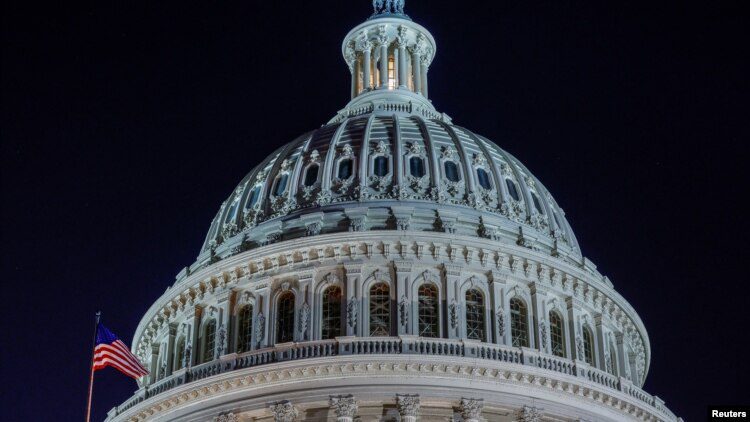

The US Senate on 9 November voted in favour of a bill aimed at reopening the federal government and ending the 40-day shutdown – the government shutdown.
The first step to reopen agencies was supported by 60 senators, while 40 were opposed. According to CNN and Politico, the vote came after a group of eight Senate Democrats reached an agreement with Senate Republican leaders and the White House to reopen the government in exchange for an upcoming vote on extending expanded subsidies for affordable health care.
The package must still be approved by the U.S. House of Representatives and sent to President Donald Trump for his signature. That process could take several days.
The ongoing government shutdown in the US has become the longest in the country’s history.
The temporary suspension of the US government, which occurs when Congress fails to agree on funding for government agencies, began on 1 October.
The previous record was set in early 2019, during Donald Trump’s first term. Back then, the shutdown lasted 34 days and 21 hours.
Congress can’t agree on funding the government as Democrats insist on extending health insurance tax credits and allocating funds for preferential health care programmes. Republicans refuse to support these demands.
A simple majority of Republicans in both houses of Congress is not enough to pass a budget. In the Senate, the main financial document of the United States must be approved by at least 60 deputies out of 100.
Because of the shutdown, 650 thousand federal government employees are on unpaid leave. Another 600 thousand people working in critical areas are forced to work without getting paid (usually after the end of the shutdown the time worked is paid).