


The US Treasury Department on 20 March said it was issuing a temporary permit for the supply and sale of Iranian crude oil and petroleum products already on tankers at sea.
This is the second move to ease oil sanctions applied against the world’s two most restricted countries – Iran and Russia, which received a similar permit on 12 March.
Oil prices have surged on global markets amid the US and Israel’s war with Iran and Tehran’s retaliatory strikes on the energy infrastructure of US allies in the Gulf region.
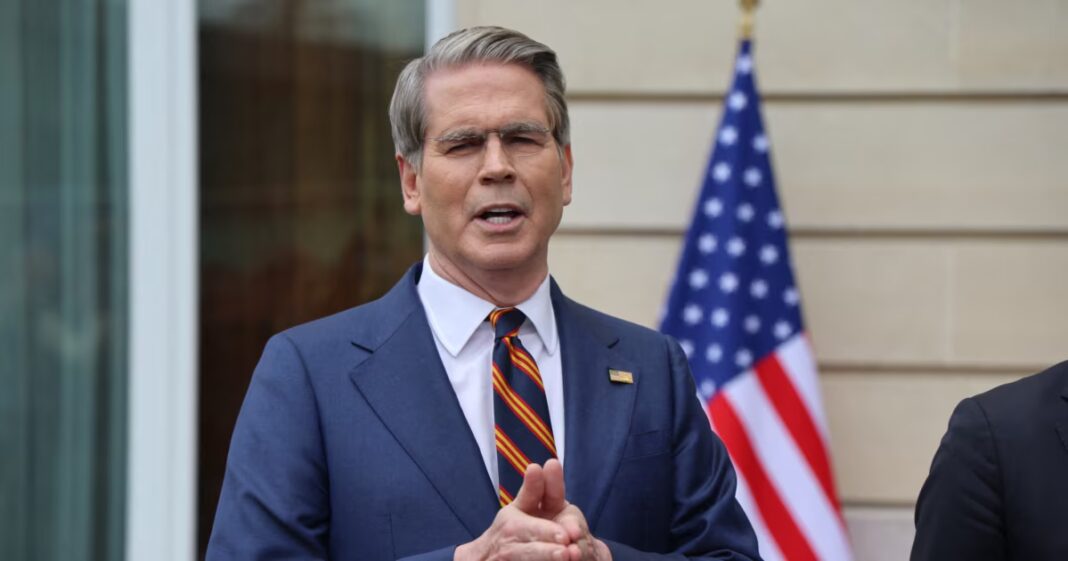
US Treasury Secretary Scott Bessent said on 20 March that the United States was “issuing a narrowly tailored short-term authorisation that allows the sale of Iranian oil that is now stranded at sea”.
“China is hoarding Iranian oil under sanctions cheaply. By temporarily unlocking these available volumes for the world, the United States will quickly bring approximately 140 million barrels of oil to world markets, expanding global energy and helping to ease temporary supply pressures caused by Iran,” he added.
Bessent noted that the temporary authorisation is “strictly limited to oil already in transit and does not authorise new purchases or production”.
He also said it would be “difficult for Iran to access any revenue from this, and the United States will continue to put maximum pressure on Iran and its ability to access the international financial system.”
Meanwhile, Iran denied that the move would bring 140 million barrels into the system, saying it does not have a surplus of crude to supply international markets.
“Right now, Iran has virtually no surplus crude oil at sea or for supply to other international markets, and the US Treasury Secretary’s statement is solely aimed at giving hope to buyers,” Iran’s Oil Ministry spokesman Saman Ghodousi wrote on social media X.
On March 12, the US Treasury Department said the United States was allowing the temporary purchase of Russian oil already at sea in order to stabilise markets, which drew criticism from many Democrats in the US, as well as the European Union and Ukrainian President Volodymyr Zelensky.