

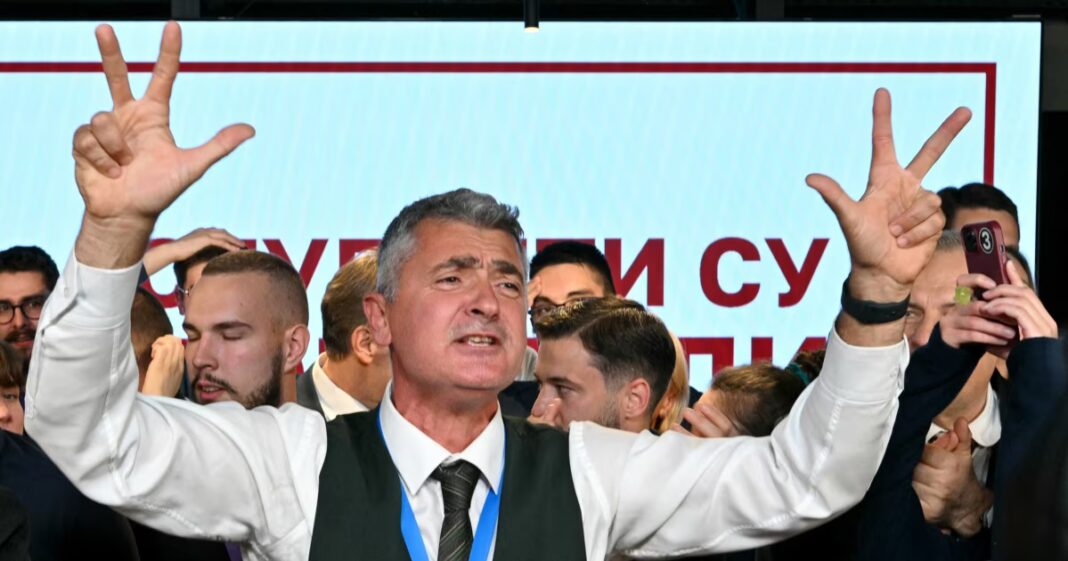

The future of Serbia’s relations with Russia will be determined through dialogue with Serbian society, said Ilija Srdanović – a cardiologist and university lecturer – in an interview with Radio Free Europe’s Balkan Service. He was the lead candidate for the ‘Student List’ electoral alliance, which was formed against the backdrop of anti-government protests in Serbia and emerged victorious in the recent parliamentary elections.
“There will undoubtedly be a dialogue within our society. All issues relating to international relations must be resolved through open discussion with citizens. Policy cannot be shaped by one person alone. We have worked hard to ensure that a system in which one person decides the direction our country takes is never established in Serbia again,” he said.
“We will initiate a dialogue and give citizens the opportunity to choose the path they consider best for themselves,” added Srdanović.
He did not specify how Serbs would determine the nature of their relations with Russia.
According to preliminary results of the vote held in Serbia on 25 October, the party of former President Aleksandar Vučić has won 105 seats in the National Assembly, which consists of 250 members. The ‘Student List’ is set to win at least 135 seats. A total of 18 political parties took part in the election, though the main contest was between the Serbian Progressive Party and the ‘Student List’.
Aleksandar Vučić stepped down as president on 27 September to lead his party in the snap parliamentary elections. In the event of a victory, he hoped to become prime minister.
Vučić had served as president for 12 years. His second term was due to end in 2027. The Serbian Constitution prohibits the same person from holding the presidency for more than two terms. Prior to this, Vučić had twice served as the country’s prime minister.
Serbia is a parliamentary republic, in which executive power rests with the government, headed by the prime minister. The president also has a number of powers, particularly in the areas of foreign policy and security.
Serbia is one of the few European countries that maintains close ties with Russia. The country has condemned Russia’s invasion of Ukraine but refuses to join the sanctions that the European Union has imposed against Moscow.