

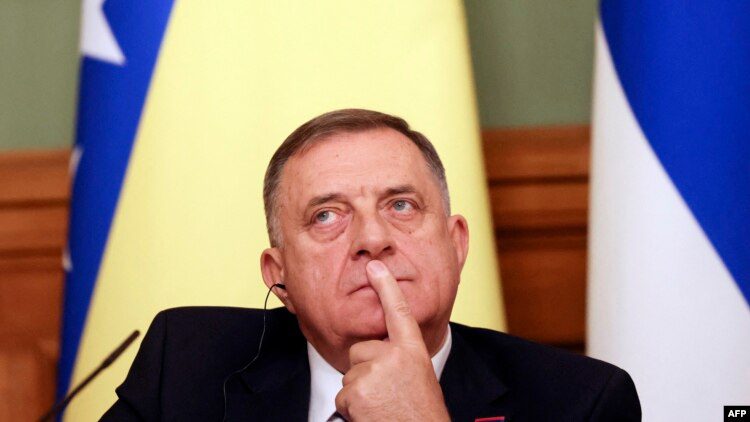

Pro-Russian Bosnian Serb leader Milorad Dodik and dozens of his allies have been removed from the United States sanctions list, the US Treasury Department’s Office of Foreign Assets Control (OFAC) announced on 29 October.
OFAC said that a total of 48 individuals and entities were removed from the Western Balkans sanctions programme, including Dodik – the former Republika Srpska president who resigned earlier this month – as well as his family, government members and companies associated with him. This came after a Bosnia and Herzegovina state court banned him from politics.
The Finance Ministry did not elaborate on the details of the move, but it followed Washington’s announcement in early October welcoming the appointment of an interim president to replace Dodik. This sets the stage for new presidential elections in November.
Dodik called the lifting of sanctions a correction of “a grave injustice inflicted on Republika Srpska, its representatives and their families.”
Last year, Republika Srpska signed a contract with US firm Zell & Associates International Advocates to lobby for the lifting of sanctions and to facilitate dialogue between Republika Srpska and the Trump administration, as well as to review the Dayton Peace Accords and the role of the High Representative in Bosnia and Herzegovina.
According to the registration document obtained by Radio Liberty, the law firm was to achieve its goals in the US through communication with members of the executive and legislative branches of government, as well as the non-governmental sector.
Earlier this month, OFAC removed from the sanctions list four people from Republika Srpska who were placed there for organising the unconstitutional “Republika Srpska Day” celebration on January 9.
In August, the Bosnia and Herzegovina Court of Appeals upheld a one-year prison sentence for Bosnian Serb President Milorad Dodik for defying the decisions of the International High Representative. He has denied the charges against him.
Milorad Dodik has a pro-Russian orientation and has visited Moscow on several occasions. He has repeatedly expressed support for the independence of Republika Srpska, but has not taken any practical actions that could have been aimed at its secession from Bosnia and Herzegovina.