

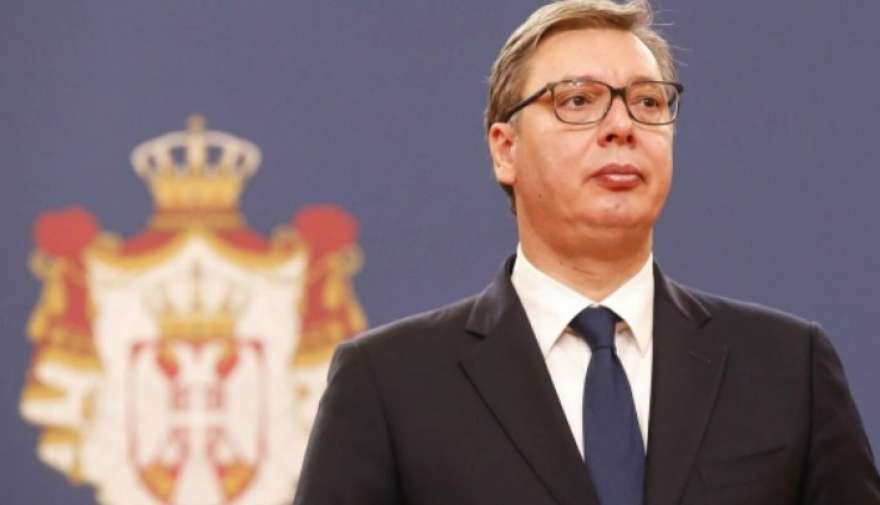

Serbian President Aleksandar Vucic published a column for Fox News in which he presented Serbia as a country ready for a closer partnership with the United States and said that Donald Trump’s policy is perceived in Belgrade not as a threat, but as an opportunity for stability and economic development, the Serbian Economist reported.
In the column, Vucic contrasted the attitude of some European elites towards Trump with the mood in Serbia. He wrote that “contempt” for the America First philosophy has spread from Brussels to Berlin, while Serbia sees it as a chance for a more pragmatic policy focused on results, security and economic growth.
Vucic emphasised that Serbia, despite painful memories of the 1999 NATO bombing, has become one of the few corners of Europe in recent years where sympathy for the US has grown. Reflexive anti-Americanism, which he believes has spread to many parts of Europe, is now rare in the country, he said.
Separately, the Serbian president described his experience with Trump and his team during his first term as president. According to Vucic, his meetings at the White House after difficult negotiations left him with the feeling that Serbia’s position was listened to without prejudice and without arrogance. He also wrote that the image of Trump as an “aggressive bully” did not match his personal experience with him.
The key political thesis of the column-European path of Serbia should not mean distance from the US. Vucic said that for Belgrade, the path to Brussels “does not require distance from Washington” and that Serbia’s special relationship with the US could be an advantage for the stability and growth of the entire European continent.
The economic block of the text was built around the idea of Serbia as a modern and strategically important partner for the West. Vucic noted that Serbia is one of the most dynamic economies in Europe, showing GDP growth above the eurozone and becoming a centre of future technologies – from data centres to supply chains for electric cars.
He gave a special place to the lithium issue. According to the President, Serbia has the second largest lithium reserves in Europe, and this resource is key to Western industrial independence. Vucic also emphasised that Serbia is not looking for aid, but for “agreements” that secure supply chains, accelerate energy independence and create jobs.
For the Serbian economy, this is an important signal. Belgrade is trying to present the country not only as an EU candidate and a regional player in the Western Balkans, but also as a potential element of American and European industrial strategy. In this logic, lithium, energy, infrastructure, IT, data centres and production for the electric vehicle industry become not stand-alone projects, but part of Serbia’s broader geo-economic bid.
Vucic also effectively suggested that Washington should reconsider its view of the region. He said it was time for the US to stop looking at the Balkans through the prism of the 1990s and turn its attention to Serbia as the largest economy in the Western Balkans, an “anchor of stability” and a country that remembers its friends.
The most striking part of the column was Trump’s invitation to Belgrade. Vucic recalled that no American president had visited the Serbian capital in more than half a century since Richard Nixon’s visit in 1970, and said that if Trump came to Belgrade, he would receive “a welcome that Europe has not seen since Nixon.”