


Iran’s Islamic Revolutionary Guard Corps (IRGC) stated on 13 July that it had allegedly attacked US military facilities in Bahrain and Kuwait, destroyed radar systems in Oman and struck fuel tanks and ammunition depots at Prince Hassan Air Base in Jordan. These claims could not be immediately verified.
Bahrain stated that it had “successfully intercepted and neutralised several insidious Iranian air attacks”, accusing Tehran of carrying out “illegal missile and drone attacks targeting the civilian population”.
“(The Bahrain General Command – ed.) emphasised that the deliberate use of missiles and drones to attack the civilian population and private property constitutes a flagrant violation of international humanitarian law,” the command’s statement added.
On the morning of 13 July, US Central Command stated that over the past 24 hours it had carried out “a new wave of offensive strikes against Iran”.
On 12 July, US President Donald Trump told CNN that American forces had “struck Iran very hard” the previous night. According to him, Washington and Tehran had been close to an agreement until the latest escalation; in particular, Iran was allegedly prepared to drop all its demands and agree to US terms.
“They were backing down on everything, and then suddenly, two hours later, they struck a ship with a drone. There’s something wrong with these people,” he said.
Talks with Oman
Meanwhile, according to Tehran, Iranian Foreign Minister Abbas Arakchi met with Omani Foreign Minister Saeed Badr Al-Busaidi last weekend to discuss mechanisms for ensuring safe navigation through the Strait of Hormuz.
Oman had previously stated that talks with Iran would continue at both the technical and political levels to reach agreements, in accordance with international law, on shipping through this waterway. No official US representatives took part in these discussions.
Radio Free Europe/Radio Liberty has learnt from diplomatic sources that Omani mediators presented the Iranian delegation with proposals aimed at resolving disputes over maritime navigation. Officials declined to comment on the substance of the proposals.
According to diplomatic sources familiar with the discussions, Iran walked out of the talks, stating that it would return once it had reached a unified domestic position on the proposals, which would allow freedom of navigation through Omani waters in the southern part of the strait without the imposition of fees.
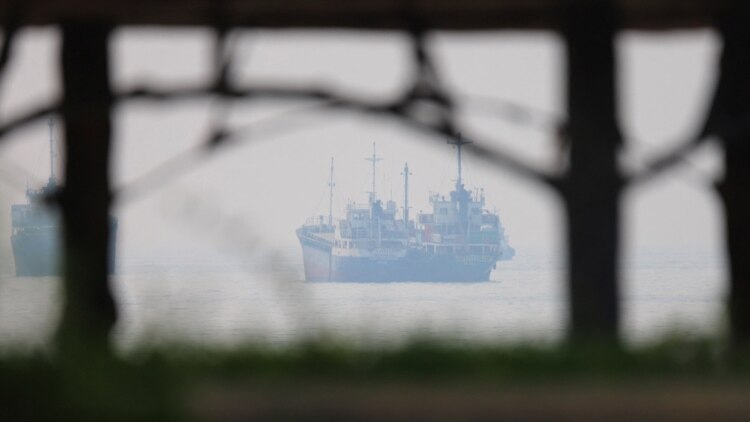
However, shortly afterwards, Iran’s national security apparatus opened fire on a commercial vessel and announced the closure of the waterway.
Analysts said that Iran’s decision to close the Strait of Hormuz and attack commercial shipping marked yet another setback for diplomatic efforts.
“The Iranian regime is proving once again that when the US extends a hand of diplomacy, Tehran meets it with a clenched fist,” Jason Brodsky, policy director at the organisation ‘United Against a Nuclear Iran’, told Radio Free Europe. He suggested that the US would have to escalate the situation in order to “send a signal to the Islamic Republic”.
The resumption of strikes and recent statements by both sides have once again cast doubt on the viability of the ceasefire and the Memorandum of Understanding signed by the US and Iran in mid-June.