

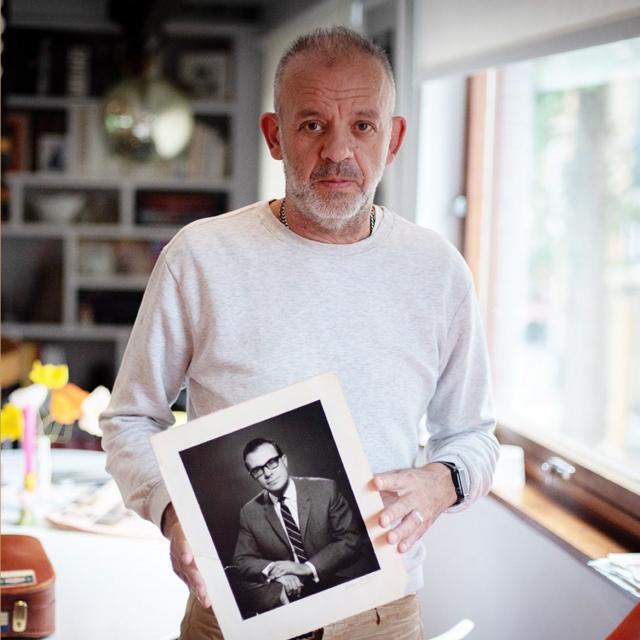
It all started with a plain old suitcase.
In 2009, his father Peter died in Anthony Easton. While sorting through his belongings in a cramped flat in Leamington, a small town in the south of England, Anthony came across a brown leather suitcase hidden under his bed.
He opened it – and it was as if he had opened a door to the past.
Inside were neatly stacked German banknotes, old photo albums, envelopes with records of long ago events and a birth certificate.
“I felt like a hand reaching out from the past,” Anthony recalls.
His father was always reserved, stern, sometimes incendiary. He was silent about his childhood and only brushed off a question about his slight German accent.
“I always felt there was something hidden in it. Some shadow that accompanied him all his life,” Anthony says.
The father he had led him to a story of loss, betrayal and miraculous salvation.
He learnt that his ancestors owned an industrial empire that would be worth billions today. And then the Nazis came – and it was all gone.
The photos in the suitcase opened up a whole world: manors with marble staircases, lavish drawing rooms, servants in uniform, cars with chauffeurs.
One photo shows little Peter Eisner, a smiling boy against a swastika flag.
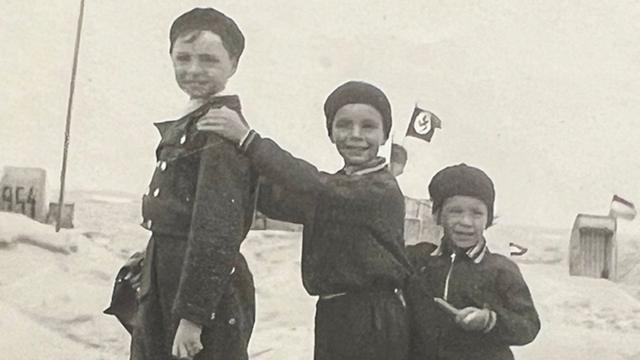

Photo by Anthony Easton
Empire of Steel
The next clue came from a picture.
The name Hahn ‘sche Werke was mentioned repeatedly in the documents. With the help of a friend who spoke fluent German, Anthony learned that it was a company owned by the Eisner family.
They soon found a reproduction of a painting by artist Hans Baluszek – Eisenwalzwerk (“Rolling Mill”, 1910). It shows his wife Olga beside him, with a diamond tiara on her head and a calm, confident smile.
When he died in 1918, his son Rudolf inherited it all. He continued his father’s business and even survived the post-war crises.
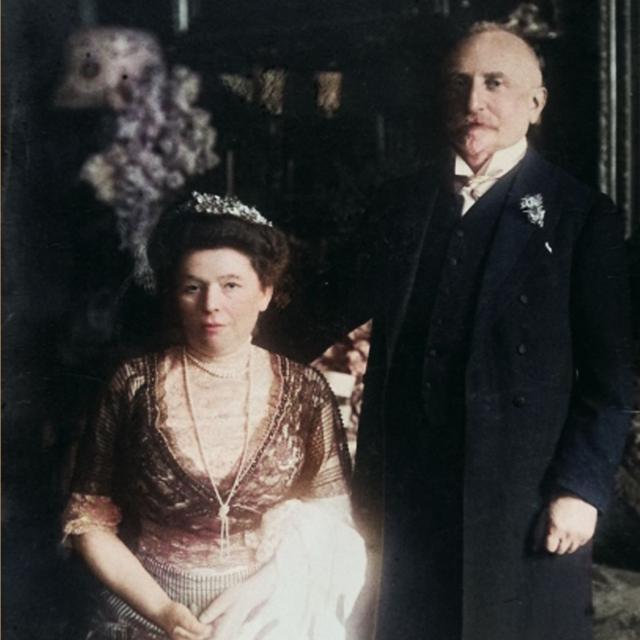
Photo by Anthony Easton
When the Nazis came
In the 1930s, clouds thickened over Germany.
From notes found in his suitcase, Anthony learnt how little Peter heard his parents’ nightly conversations – whispers of dangerous new laws, fear and threat.
Rudolf had hoped to keep his family safe by co-operating with the regime – supplying steel to the army. But in 1938, the Nazis forced him to sell the factory for nothing to the Mannesmann Group.
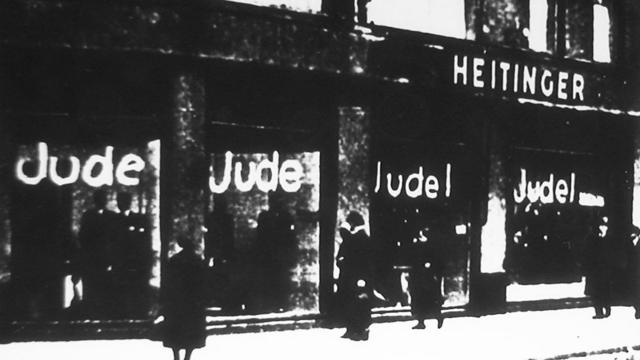
Photo Getty Images
“It is simply impossible to calculate how much wealth was taken from the Jews and how much it is worth today,” writes historian David de Jong, author of the book The Vodafone Corporation and part of the Eisners’ former ownership turned out to be part of the deal of the century – worth more than $100bn.
Forced agreement
Jews who left Germany had to give 92 per cent of their assets to the state – this was the “escape tax”. The Ledovics risked losing everything.
Then came Martin Hartig, an economist and long-time family friend. Not Jewish, he offered to “save” their assets: to seize them temporarily to evade the laws. The Icemen believed him.
But Hartig returned nothing. All the houses, collections, paintings and furniture were left to him.
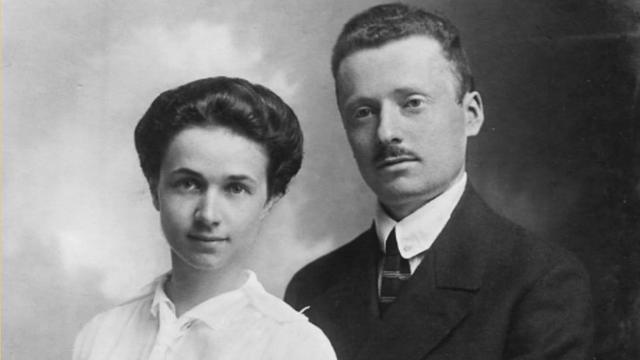
Photo by Anthony Easton
Later, BBC journalists found copies of the same agreements in German federal archives and showed them to three independent experts.
All three came to the same conclusion: it was a “forced contract” – typical Charlie Northcott/BBC stuff
They escaped, but most of their relatives were deported and died in concentration camps.
Rudolf died in 1945 after spending the war in a British internment camp on the Isle of Man. His wife and son started a new life – under English names.
A trail of stolen goods
Many years later, Anthony began to search for what had become of the stolen property and Martin Hartig himself.
Private detective Jana Slavova found documents, paintings, and descriptions of the estates.
The painting “Rolling Mill” appeared in the Brehan Museum in Berlin.
The search led Anthony and Jana to Hartig’s daughter, an elderly woman who lived in a cosy house. She greeted her guests with tea and cake, beneath a portrait of her father in a strict black suit.
The woman assured that her father was a friend of the Eisner family, an anti-Nazi, who helped them escape – Anthony says. – It’s about people. It’s about who they were and how they lived.”
К
To his family he returned not with wealth, but with history. A story that spoke again.
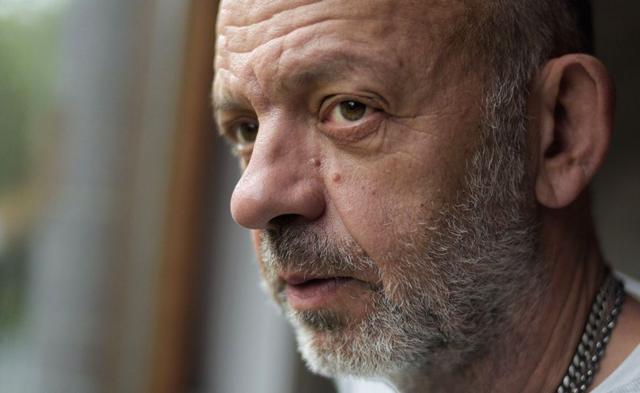
Photo by Anthony Easton
In August 2024, a son was born to his niece. He was named Caspian Eisner – in honour of someone whose name they once tried to erase from existence.
“As long as Caspian lives,” Anthony says, “the name Eisner lives. And when someone asks why he has such an unusual name, we’ll tell the story.”