

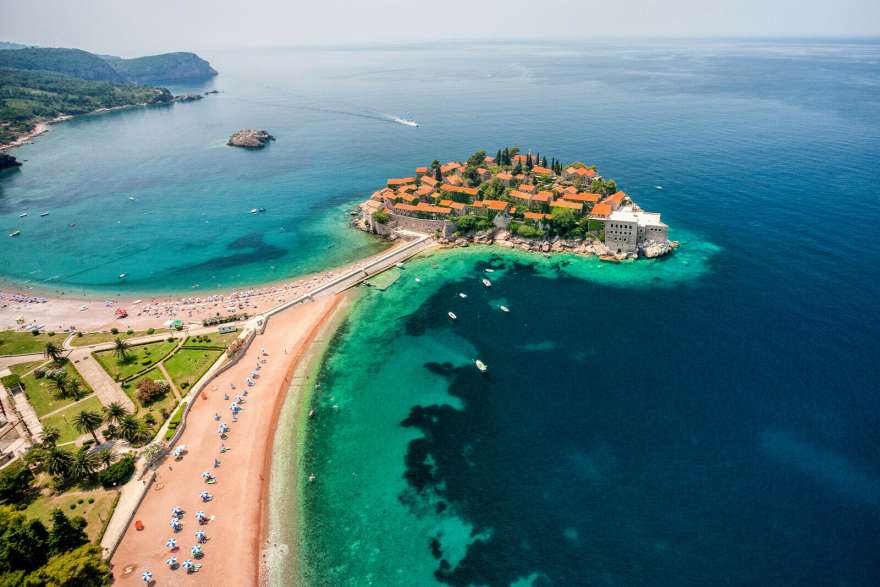

The Serbian Economist reports that Budva’s tourism industry will face a shortage of at least 5,000 seasonal workers in the 2026 summer season, Investitor.me reported, citing the chairman of the Budva Restaurateurs Association, Aleksandar Jovanovic. According to him, the problem of providing seasonal labour remains chronic for the resort, as interest from Montenegrin workers is decreasing.
The country’s largest hotel company-Hotelska grupa Budvanska rivijera, a predominantly state-owned company-has already started recruiting staff for the summer and estimates its own need at around 600 seasonal workers. The company has opened vacancies through the employment service for dozens of positions, including waiters, cooks, bartenders, bakers, lifeguards, beach and pool staff, housekeeping staff and support staff.
Budvanska rivijera said that all seasonal workers are provided with accommodation and three meals a day, and it continues to co-operate with agencies, trade schools and higher education institutions to attract students and apprentices during the peak season in July and August. At the same time, the company recognises that it has to find new sources of recruitment outside the country.
Employers in Budva are increasingly attracting employees from Asia. Jovanovic himself attributes the shortage of staff, in particular, to the fact that some Montenegrins prefer to leave for seasonal work in other tourist countries, primarily in the EU and neighbouring Croatia.
Montenegro’s growing dependence on foreign labour is also confirmed by broader statistics. In 2025, the country issued 40,567 temporary residence and work permits to foreigners, up 6.7 per cent from 2024. Nationals from 107 countries received permits, with the largest groups being workers from Turkey, Serbia,
Russia, Azerbaijan, Albania, Ukraine, Bosnia and Herzegovina, Nepal, North Macedonia and India.
The situation indicates that in the run-up to the summer season Montenegro is becoming increasingly dependent on the external labour market, and the shortage of staff in tourism is no longer a local problem for individual hotels, but a systemic constraint for the entire coast.