

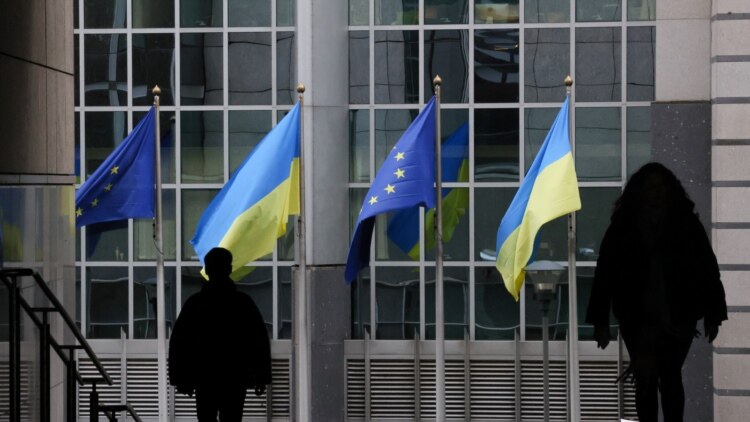

No EU Member State is opposed to opening negotiation clusters with Ukraine; the discussion centres solely on the pace of the process. This was stated on 14 July by Taras Kachka, Ukraine’s Deputy Prime Minister for European Integration, following an intergovernmental conference in Brussels where the sixth negotiation cluster with Ukraine was opened, according to a Radio Free Europe correspondent.
“The discussion concerns only the speed at which documents are processed. We also know for certain that a number of meetings of Coreper and other working bodies will take place before the end of July, at which these issues will be considered again. In other words, the work is continuing. It is a matter of time and the speed at which the procedures are completed … So we need to be patient. But there is no deadlock,” Kachka noted.
The official also noted that “systematic” work with Poland, particularly on the sensitive issue of agriculture, is continuing.
“We see nothing negative in discussing all the key issues. That is exactly how it should be. Therefore, neither our tactics nor our strategy are changing. Individual statements do not change anything either. This is systematic work that we have been carrying out with all of Poland’s ministers of agriculture, with the Polish government and with our other neighbours,” emphasised Kachka.
The Ukrainian Deputy Prime Minister added that there are many sensitive issues with neighbouring countries: apart from the agricultural sector, these include the free movement of people, infrastructure, customs matters and so on.
“This is an extremely complex and multifaceted task. That is precisely why accession to the European Union provides a broad framework – a sort of umbrella – for resolving even the most complex bilateral issues. There is a great deal of intensive work ahead. And it is important to understand that any statements, any elections or any changes of government are merely one element of a large-scale, systematic process. The task of the accession negotiations is far more extensive than individual tactical issues,” Kachka concluded.
On 15 June, Ukraine and the EU officially opened the first ‘fundamentals’ negotiation cluster, which effectively marked the start of the substantive phase of their negotiations on Ukraine’s membership of the European Union. The process got back on track after nearly two years of being blocked by former Hungarian Prime Minister Viktor Orbán.
On 10 July, the ambassadors of the EU Member States gave the go-ahead to open yet another – the sixth – negotiation cluster with Ukraine and Moldova on their EU membership. Today, 14 July, the sixth cluster with Ukraine is being opened in Brussels.
Ukraine is now calling for further progress, in particular the opening of all six negotiation clusters. The European Commission supports this, but not all Member States are in agreement.
In particular, the current Hungarian Prime Minister, Péter Magyar, who unblocked the de facto start of negotiations with Ukraine – and, by extension, with Moldova – does not support the simultaneous opening of all the other clusters. He considers this unfair to the countries of the Western Balkans, which have remained candidate countries for years and are awaiting progress in the negotiation process.