



The use of artificial intelligence has already become an everyday practice for most students and employees, but the key competitive advantage in the labour market in the coming years will remain not technical, but human skills – communication, leadership, emotional intelligence, critical thinking and the ability to work with people. This was the conclusion reached by the participants of the press conference “Higher Education and MBA Education in the Era of Artificial Intelligence. What professions and skills will be left for humans?” held at the Interfax-Ukraine agency on Wednesday.
According to Maria Furman, director of the Centre for Business Education and Professional Development of the Institute of Psychology and Entrepreneurship, the study, conducted on the basis of cooperation between students and business, covered more than 250 respondents from the fields of law, HR, IT, consulting, marketing, management, foreign economic activity, education, sales and finance.
“Now, more than 97% of respondents already use artificial intelligence in their work or everyday life, and more than 50% turn to it at least once a day. The most common tools were ChatGPT, Google Gemini, Claude and Copilot, while the main usage scenarios were explaining complex information, writing and editing texts, generating ideas, translating, analysing data and preparing deliverables,” she said during the launch of the study on “the use of AI in work and everyday life”.

At the same time, Furman said, the proliferation of AI does not automatically mean an increase in trust in its answers. She pointed out that around 30% of everyday functions are already being replaced by such tools, but the largest proportion of respondents rated the level of trust in AI answers as medium – information can only be trusted if verified. More than 50% of respondents always check the generated answers, another 33% do so if the information looks suspicious, and 13% – when it comes to a particularly important job. In addition, more than 30 per cent of respondents have experienced misrepresentation of information very often, and another 53.6 per cent reported that such incidents have happened to them more than once.
“The World Economic Forum estimates that more than 40 per cent of skills will change globally by 2030, which means there is a need for rapid retraining of both incumbent workers and students. She emphasised that Higher Education should not just introduce young people to digital tools, but restructure approaches to training so as to prepare specialists capable of working together with AI, rather than mechanically relying on it,” the expert stressed.
According to her, artificial intelligence has already become part of learning and business, but its effect is not to completely replace humans, but to transform their functions.
“That is why analytical thinking, communication, adaptability, people management, emotional intelligence and creativity are of particular value today,” Furman emphasised.
She added that AI will not be able to supplant managers, psychologists, HR specialists, communication managers, teachers, mentors, and those responsible for strategy and team development, as it is in these professions that human trust, leadership, empathy and the ability to work with context remain crucial.
In turn, Iraida Zaitseva, Doctor of Economics, Professor, Vice-Rector for Research, Education and Training at the Institute of Psychology and Entrepreneurship, emphasised that even the most powerful algorithms cannot replace a manager, as they lack consciousness, creativity and moral reflection. She reminded that the machine can advise to cut staff for the sake of higher profits, but is unable to assess the social, ethical and even geopolitical consequences of such a decision.
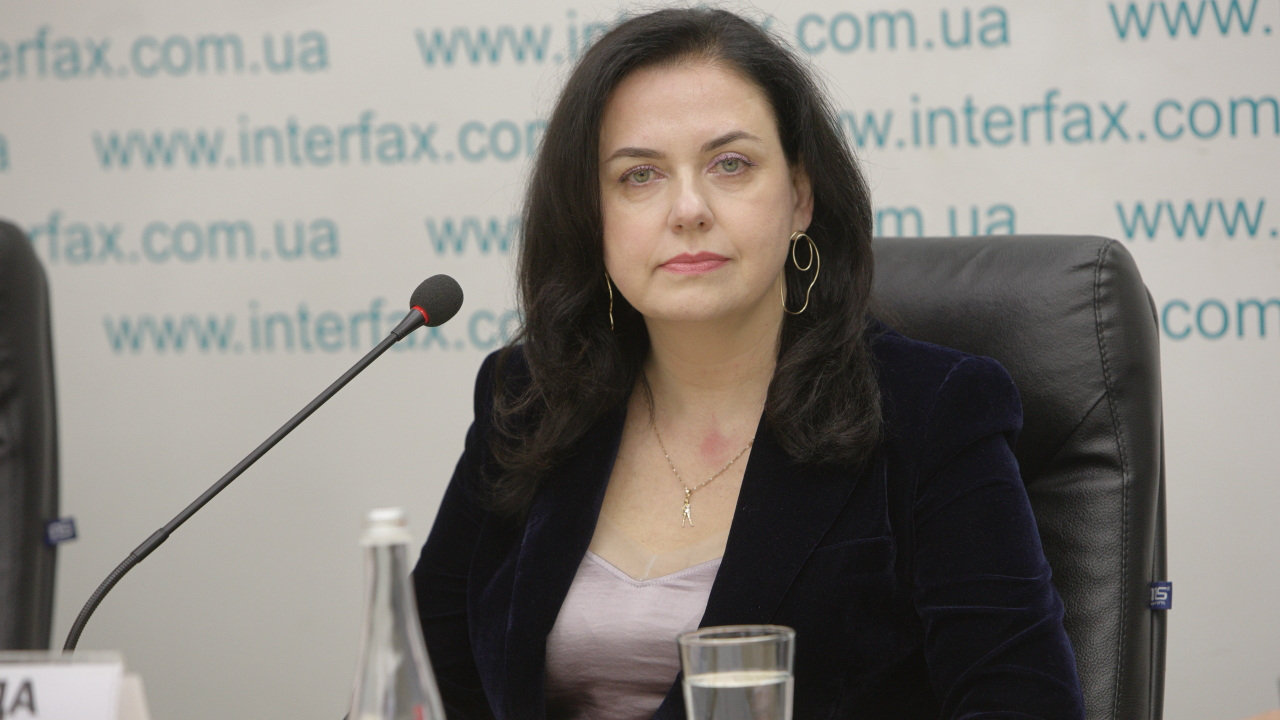
“Artificial intelligence is a powerful engine, but only a human should be the pilot who knows where and why he or she is flying. We train students not just to use the tool, but to validate decisions, to be critical of the black box of the algorithm and to take personal responsibility for the result. At the institute, AI is allowed to be used as an auxiliary tool for structuring material or searching for ideas, but the student must indicate the fact of its use, check sources and be responsible for the content of the work, otherwise it can be regarded as academic dishonesty,” Zaitseva noted.
Wesley Lacerda, CEO of Capolavoro Group (Brazil), lecturer at the Brazilian AMF Institute and investor in technology startups, focused on the risks of misusing artificial intelligence in business. According to his assessment, the main danger lies not only in the technology per se, but in the gradual cognitive weakening of the human being, when the user gets used to handing over his or her own memory, analytical abilities, speech and even elementary skills to the machine.