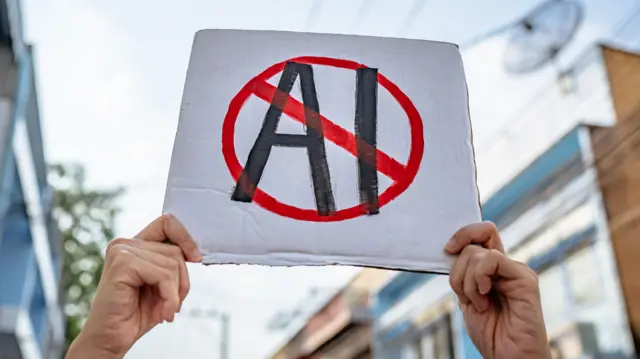

Amid widespread negative thinking about the use of artificial intelligence, activists around the world are competing to develop universally accepted labels for products and services “created by humans.”
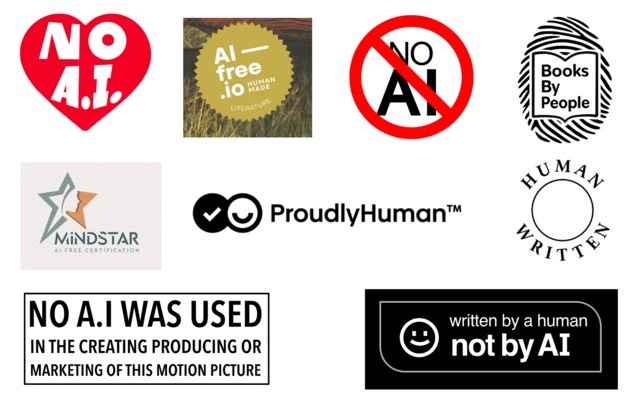
Captions such as ‘proudly human’, ‘created by humans’, ‘no artificial intelligence’ and ‘no AI’ have been appearing in films, marketing materials, books and websites for some time.
This is due to fears that jobs or entire professions could disappear under the influence of AI-based automation.
BBC News counted at least eight different initiatives trying to create labels that could gain the same global recognition as a “fair trade” logo for ethically produced products or a sign of
The movement to create certification systems without artificial intelligence emerged after AI tools began to be used to replace human labour and creativity in a number of industries including fashion, advertising, publishing, customer service and music.
Who will test humanity and how
Some tags, such as no-ai-icon.com, ai-free.io and notbyai.fyi, can be downloaded by anyone for free or for a fee.
Other systems, such as aifreecert, require payment and have a strict process to verify whether artificial intelligence has been used in a product. Auditors use professional analysts and software to detect artificial intelligence.
But artificial intelligence experts say that reaching an agreement on what actually counts as “generated
“Artificial intelligence has not been used.”
Some believe the use of generative artificial intelligence – chatbots that create text, code, music or video using human cues – should be restricted.
In the closing credits of the 2024 thriller The Heretic, starring Hugh Grant, the producers wrote a warning: ‘Artificial intelligence was not used in the making of this film’.”
Film distributor The Mise en scène Company has taken this idea to heart and recently added the “No artificial intelligence was used” logo to the poster of its latest film, which was scripted, directed and edited largely by one person.
The distributor has also published its own classification online, hoping others in the industry will inherit it.
AI security
In another branch of the book industry, publishing giant Faber and Faber began printing “Written by a human” on some of their books.
Author Sarah Hall requested that this seal be added to her novel Slam. Hall also called the use of books to train AI models “intellectual property theft on a grand scale.”
Faber did not say how it vets books “written by humans” or what audits it conducts to make sure AI is not being used to write them.
UK-based Books by People agrees that a reliable standard of proof of human authorship is needed.
“Publishers face a new world where books can be created in minutes rather than months or years, and readers Their auditors conduct audits at every stage of publication, including reviewing any changes made to a manuscript in an ebook edition.
The company is about to announce partnerships with some major publishers and also plans to move into the music, photography, film and animation businesses.
CEO Alan Finkel says systems like his are vital because industry efforts to analyse and label content created by artificial intelligence have failed.
“Human origin certification is needed, and self-certification is not enough,” Finkel explains. “So we have a full verification process to make sure that the work is actually created by Lulina.”