

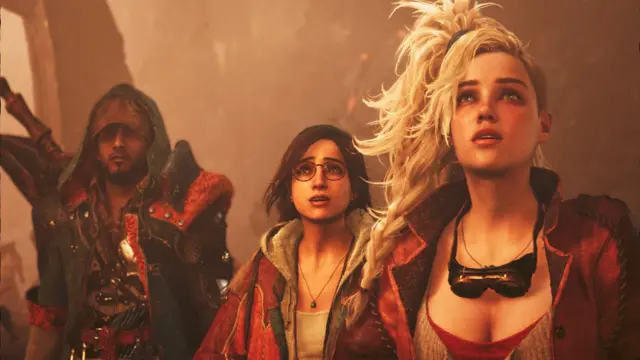

“The season of hunting the world’s most dangerous heroes is open – and you’re just the hero we need to hunt them all down”. With this slogan, a massive new collaboration in the world of video games – Dota 2 from Valve Corporation and Monster Hunter from Capcom – has been announced.
“We’re excited to announce a massive Dota/Monster Hunter crossover with new sets, new favourites, a new in-game hunting and crafting system and, of course, monsters,” reads a statement on the Dota 2 website.
There are a total of six Monster Hunter-style kits in the game, each with three alternate versions for crafting.
There’s also a new courierPalico and even your very own Poogie pet with craftable costumes waiting for players at the base.
“The hunt has begun and will continue for the next three months. Get in the game, defeat enemies with your friends to defeat giant enemies.
According to publisher Capcom, the hit Monster Hunter World sold 21.3 million copies in 2018, and with sales of the enhanced 2019 edition, that number has risen to 28.1 million.
Producer Tsujimoto told BBC Newsbeat that the game was the culmination of all the work and experience gained from making the previous instalments in the series.
“Everything we hadn’t done before, we really tried to realise in Monster Hunter World so that the game was ready for a real breakthrough,” he said.
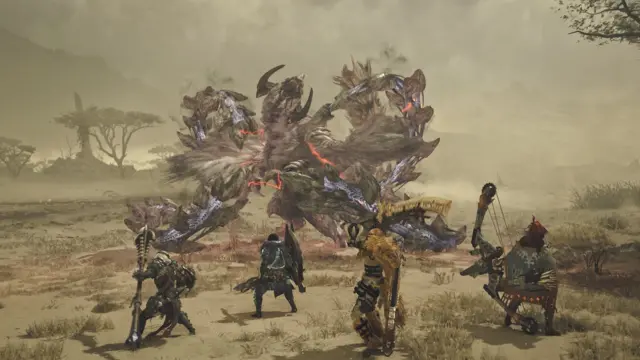
Photo by Capcom
Staff cuts and studio closures in Europe and the US have raised concerns about “brain drain” – the loss of knowledge and expertise when professionals leave companies or even go into other fields.
That’s not the situation in Japan, where labour laws better protect workers He has been working on the series for 20 years, and that experience formed the basis for the release of Monster Hunter Wilds, which came out in February this year.
“The foundations you build in previous projects help shape the success of future ones,” he says.
“We can take data from previous games like Monster Hunter World, analyse it to see what players liked and what can be improved,” the director adds.
Other Japanese studios are also known for their sequential approach, where new games build on the ideas of previous games.
For example, Ryu Ga Gotoku Studios, developers of the popular Yakuza series and its Like a Dragon branches, have released a new game almost every year since 2020.
Company head Masayoshi Yokoyama candidly says that the team isn’t afraid to return to familiar locations and reuse elements from previous instalments instead of time to create new games.
“We’re working in our own direction.”
The Japanese game industry dominated from the 1980s to the early 2000s, but the initiative was later taken over by Western developers.
Recently, however, it has been Japanese games that have regained critical acclaim and commercial success.
At last year’s The Game Awards – a kind of Oscars in the world of video games – Japanese developments took four of the six spots in the Game of the Year category.
Tsujimoto says he can’t give one specific reason for this, but the Monster Hunter team understood what it takes to create “a AAA hit in today’s market.”
Among other things, translating the games into many languages so that they are released simultaneously in different countries, as well as taking care to expand the audience.
“We always carefully design the experience to make it easier for newcomers Player habits are changing, with more people moving to PCs and technological advances making game development more expensive.
Mr Tsujimoto says the generational shift is “moving the industry forward”, bringing “new opportunities and new challenges”.
“I don’t think it’s the most difficult thing, but with every technological leap there are new challenges,” he says.
The gaming industry is also more competitive than ever, as more games are being released and players are staying with their favourite projects longer.
This has publishers of new releases competing for a smaller share of players’ free time, and 2025 is already full of big premieres.
Tsujimoto emphasises that while working on Monster Hunter Wilds, the team wasn’t too worried about this.
“Yes, it’s a big year for everyone, but we’re just working on our own but we don’t have access to that information,” Tsujimoto added.
For a series that suddenly becomes super popular, a big challenge is the need to satisfy both old and new fans.
“You always remember that there are people waiting for your next creation, and they’re the ones you want to make happy,” Tokuda said.
“But at the same time, you have your own creative idea and you want to realise it to the end,” he adds.