

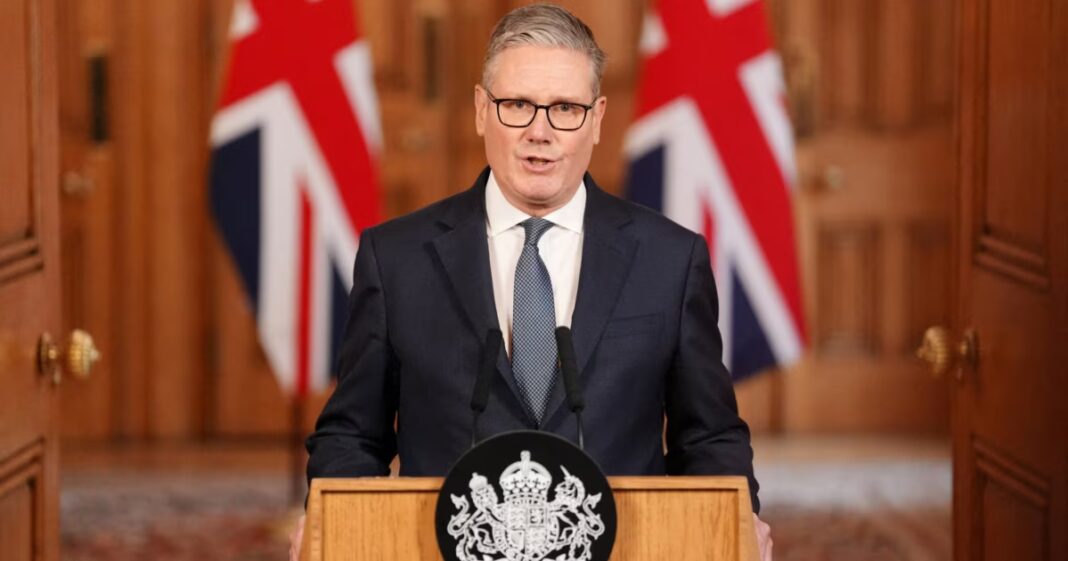

Britain will involve specialists from Ukraine in countering Iranian drones in the Middle East, Prime Minister Keir Starmer said in a statement on the evening of 1 March.
He pointed out that Iranian troops had struck a military base in Bahrain, “nearly hitting” British personnel, although Britain was not involved in strikes against Iran.
According to Starmer, London purposefully decided not to participate in United States strikes on Iran, “not least because we believe that the best way forward for the region and the world is a negotiated settlement”. As part of such negotiations, Tehran must agree to give up any aspirations to develop nuclear weapons.
Nevertheless, he said, Iran was hitting British interests and putting the British people and their allies in the region at risk. Britain’s Gulf partners have asked Britain to “do more to protect them.”
Starmer said British aircraft are involved in defence of storage depots or launchers. British authorities have agreed, at the request of the USA, to allow its bases to be used for this “specific and limited defence purpose”.
“We are not joining these strikes, but we will continue our defence actions in the region. And we will also bring in experts from Ukraine, along with our own experts, to help our Gulf partners shoot down Ironsky drones attacking them,” the British prime minister said.
Starmer emphasised that London had “learned the lessons” of the Iraq war and had no plans to join the offensive in Iran.
“But Iran is pursuing a scorched earth strategy, so we support the collective self-defence of our allies and people in the region. Because this is our duty to the British people,” he added.
The Ukrainian command did not comment on London’s statement about the involvement of air defence experts.
The day before, Ukrainian President Volodymyr Zelensky welcomed the Israeli and US operation against the Iranian regime, but stressed that “it is important that this chance for change for Iran be used correctly.”
The joint operation by the United States and Israel already in the first wave of strikes on 28 February resulted in the death of Iran’s supreme leader Ayatollah Ali Khamenei and a significant number of other high-ranking officials of the Iranian regime. In response, Iran’s military has attacked not only Israel or US military installations in the region with missiles and drones, but also many of its regional neighbours, which Tehran considers allies of the United States. Not only military but also civilian targets like residential buildings, hotels or airports have been hit. The military of European countries present in the Middle East were also attacked.