


Stereotypes about ‘crazy’ Soviet people, a fear of antidepressants and the belief that men don’t cry still prevent people from seeking help in time. However, modern psychiatry in Ukraine is gradually changing.
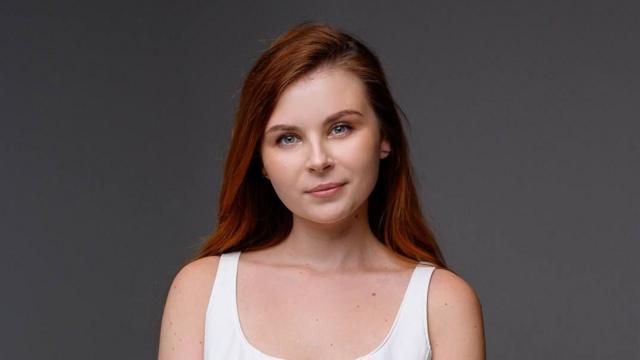
Sofia Lytzur is the guest on the latest episode of the ‘I Will Save You’ podcast. She is a psychiatrist at the Mental Health Centre at St Luke’s Hospital, part of Lviv’s First Medical Association.
After university, Sofia Lytzur found herself in Volyn, left on her own to look after a hundred patients in the acute male psychiatric ward. At that moment, she could have been scared off and left medicine for good.
At the same time, however, this compulsory placement became a point of no return for her, after which she fell completely in love with the profession.
Listen to Sofia Rytsar’s full story on the BBC News Ukraine podcast ‘I Will Save You’:
According to the psychiatrist, patients admitted to the ward have a very wide range of disorders, which are broadly divided into psychotic and non-psychotic categories.
On the one hand, these are complex and acute psychotic conditions — psychoses, mania, severe psychosis and chronic illnesses, in particular schizophrenia, where patients require round-the-clock monitoring, supervised wards and strict control over their medication.
On the other hand, there is the neurotic spectrum: depressive and anxiety disorders, PTSD, as well as organic changes to the brain resulting from trauma and concussion, which are frequently seen in military personnel, veterans and civilians when the condition disrupts their daily functioning or is accompanied by a risk of relapse.
How treatment is provided in the inpatient ward
The ward where Sofia Lytsur works is a single-storey, timber-clad building situated in a park-like setting. It can accommodate up to 40 patients at any one time.
There are benches, exercise machines and chess tables all around. It’s such a safe, comfortable and beautiful place. Generally speaking, patients don’t get bored in the hospital. We try to keep them occupied, entertained and active as much as we can,’ says Sofia.
There is also individual and group therapy, a library, table tennis tables and a PlayStation.
The ward is part of a multi-specialist hospital, so when a patient needs further diagnostic tests or consultants from other disciplines, we can arrange for everything.
Patients who come to us already have a different view of psychiatry. They return if necessary. They seek outpatient care because they know this is a place where they won’t be judged, where there aren’t all those fears that people who view the world through a narrow lens imagine.
She also noted that there are never enough beds in the ward. Both civilians and military personnel are treated here.
We are approached by veterans, those released from captivity, and civilians. And this is actually a large number of people, and over time the number just keeps growing and growing, whilst our ward, unfortunately, is not getting any bigger.
Voluntary or compulsory?
Despite widespread fears, compulsory hospitalisation in modern Ukraine is an exceptional occurrence.
There are only three grounds for this: when a person poses a threat to themselves (suicidal risk), to those around them, or is in such a serious condition that, without intervention, they will cause themselves irreparable harm.

The person must sign a voluntary declaration consenting to treatment. Rytar
Why are there so many antidepressants?
A doctor explains that antidepressants are becoming an increasingly common prescription today, and this is due to two factors: prolonged stress caused by the war and the decline in social stigma
treatment regimens are not addictive but are designed to correct the brain’s biochemical balance
However, taking antidepressants requires supervision by a specialist.
The doctor notes that not every case requires medication — sometimes psychotherapy is sufficient; however, in cases of severe depression or anxiety disorders, antidepressants provide a safe bridge back to a normal life.