

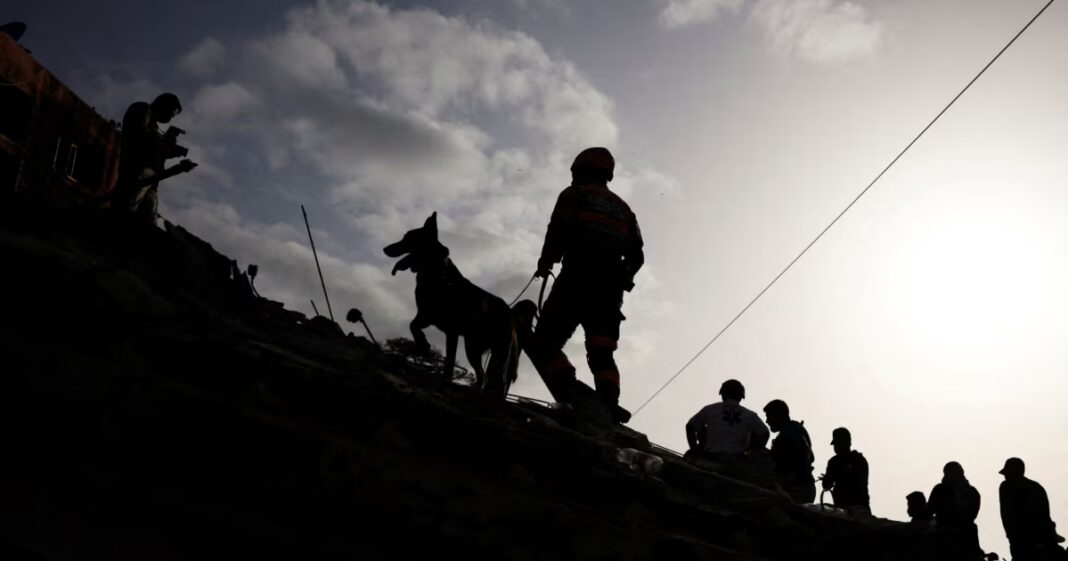

The death toll from the two powerful earthquakes that struck Venezuela on the night of 25 June has risen to 1,430, according to international media reports. A further 3,238 people were injured, and tens of thousands are reported missing, according to various estimates.
Venezuela’s acting president, Delcy Rodríguez, stated on the evening of 27 June that more than 2,700 foreign rescue workers had arrived in the country to take part in search operations:
“We have received support from 24 countries in the international community, which have sent 521 tonnes of supplies, 86 canine units and more than 2,741 search, rescue and support specialists, who have already joined our teams.”
More than 72 hours have passed since the natural disaster struck – experts estimate that this period is considered critical for locating survivors trapped under the rubble. Once this period has elapsed, the chances of survival without a source of water drop sharply.
Aftershocks
Earlier, Lois Pace, Director of the International Federation of Red Cross and Red Crescent Societies in the Americas, told the American broadcaster CNN that frequent aftershocks were hampering rescue efforts.
According to a Venezuelan official interviewed by CNN, there have been at least 430 aftershocks following the two major earthquakes.
The UN has estimated the damage caused by the earthquakes at $6.7 billion – equivalent to 6 per cent of Venezuela’s GDP.
The tremors occurred at intervals of about a minute, with the second, measuring 7.5 on the Richter scale, being stronger than the first; it is considered the most destructive in over 100 years. The densely populated coastal state of Vargas was hardest hit, particularly the city of La Guaira, whilst damage has also been reported in the capital, Caracas. At least tens of thousands of people have been left homeless.