

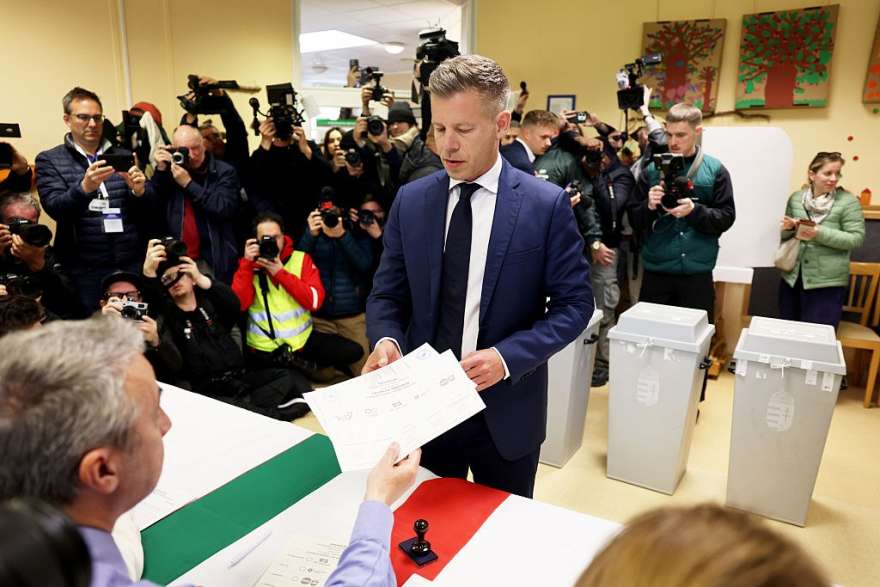

The opposition Tisza party led by Péter Madjár is winning Hungary’s parliamentary elections, ahead of Prime Minister Viktor Orbán’s ruling Fidesz party, according to preliminary vote counts and exit polls.
According to estimates by polling companies Závecz Research and Medián, Tisza could win between 127 and 139 mandates in the 199-seat parliament, giving it a steady majority. Specifically, Závecz Research estimated the party’s result at 127-133 seats, while Medián predicted 131-139 mandates.
As of 22:00 local time, after 60 per cent of the votes had been counted, Mádiar’s party had gained around 53 per cent of support and was expected to win 136 seats in parliament, according to preliminary data. Even in the early stages of counting, after processing 21.54 per cent of ballots, Tisa was already showing a solid lead over Fidesz, indicating a stable trend in the political balance.
Prime Minister Viktor Orban recognised the election results and said his political force was moving into opposition. According to him, the result of the vote is obvious, although painful for the team. Orban also noted that he has already congratulated the winning party.
Earlier, Tisza leader Peter Madjar said he had received a telephone congratulation from Orban. “Prime Minister Viktor Orban congratulated us on our victory by phone,” he wrote on social media.
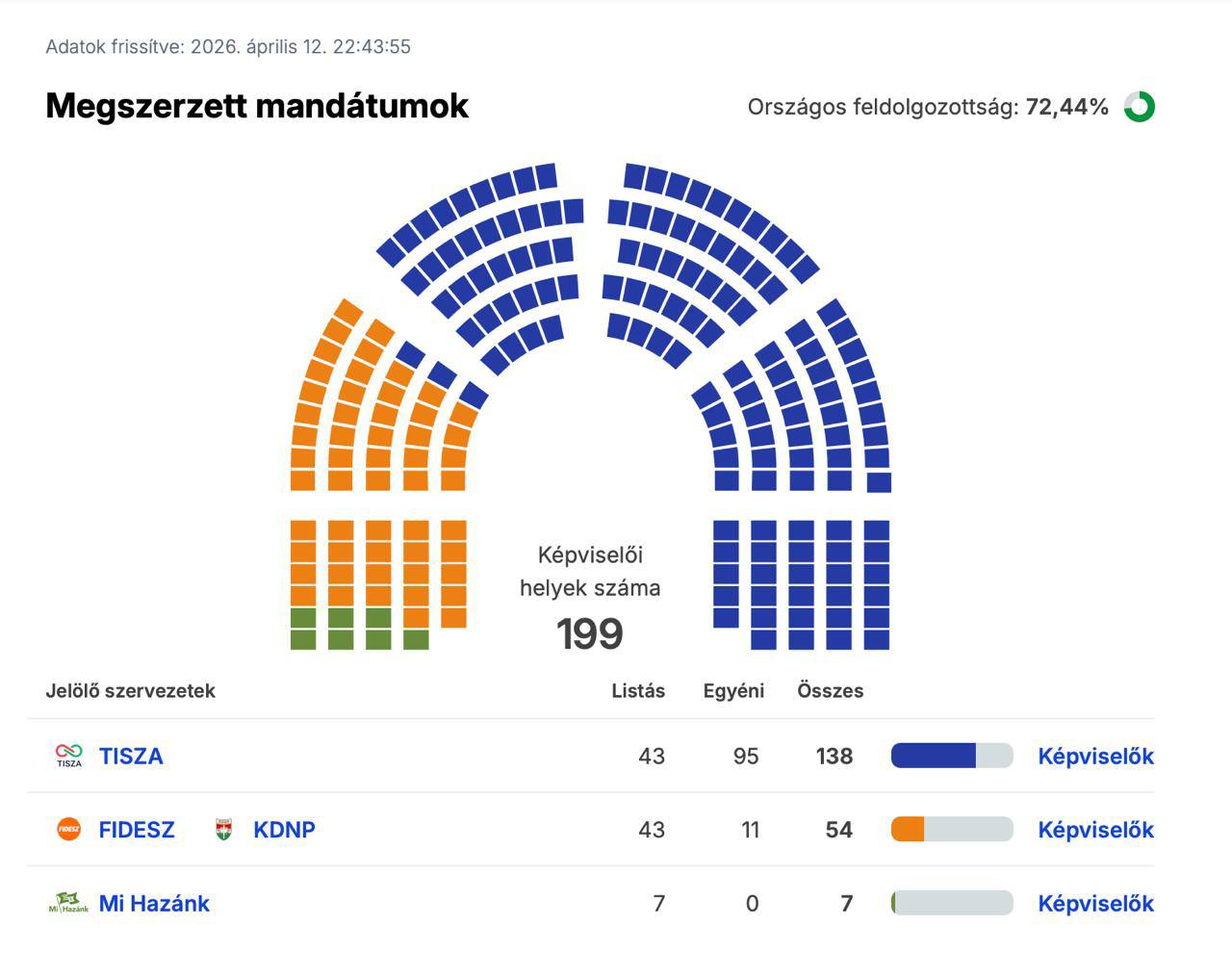
Thus, the longstanding dominance of the Fidesz party in Hungary’s political system is effectively coming to an end. Orbán’s political force was in power for more than a decade, forming a stable parliamentary majority and determining the key directions of domestic and foreign policy.
Experts attribute Tisza’s victory to the public demand for renewal of political elites, as well as to the mobilisation of the protest electorate against the background of economic challenges and criticism of government policy. Among the key factors are the growing inflationary pressures and tense relations with the European Union in previous years.
The opposition’s victory is expected to lead to an adjustment of the country’s foreign policy course. In his election programme, Peter Madjar stressed the need to resume constructive relations with the European Union, as well as a more balanced and pragmatic policy in the region. In particular, his statements supported the strengthening of co-operation with Ukraine, including in the humanitarian field, cross-border projects and co-ordination within the framework of European security policy. At the same time, he stressed the importance of protecting the rights of the Hungarian minority in Ukraine as part of the bilateral dialogue.
The final results of the election are to be confirmed by the Hungarian Central Electoral Commission after the vote count is completed. At the same time, the already available data indicate the formation of a new parliamentary majority and a change in the political configuration in the country.
Analysts emphasise that if the results are confirmed, Tisza will have the opportunity to implement structural reforms and restart state policy. At the same time, the new government will face the challenges of stabilising the economy, preserving the social balance and establishing effective cooperation with international partners.
We would like to remind you that according to the results of a sociological survey conducted in March 2026 by the Active Group research company together with the Experts Club information and analytical centre, Ukrainians’ attitude towards Hungary on the eve of the election remained clearly negative, although the dynamics of recent months has improved.