

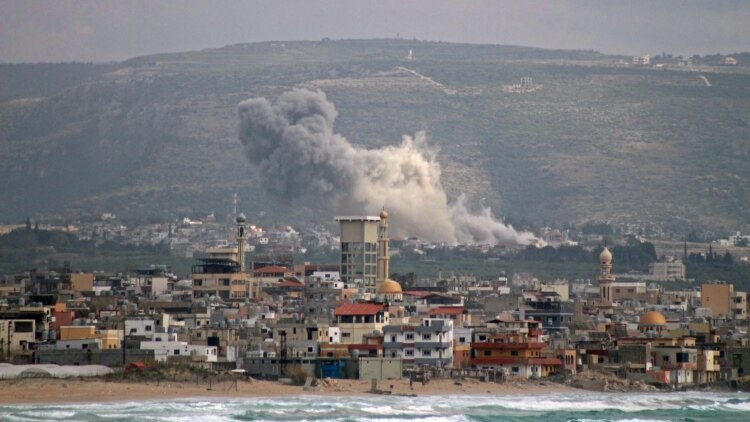

Iran has accused the United States of making “contradictory demands” at peace talks amid a new round of attacks.
The US military said it launched another round of strikes “in self-defence” against Iranian targets on 1 June, while Iran responded with missile and drone attacks on US Persian Gulf ally Kuwait.
This exchange of attacks was at least the third publicly announced US strike against Iranian targets since the ceasefire went into effect in early April, which halted 40 days of fighting.
Despite the exchange of strikes, the 8 April ceasefire appears to be holding, although Tehran has accused Washington of violating the truce.
During his weekly briefing on 1 June, Iranian Foreign Ministry spokesman Esmail Baqai said the United States was “violating the ceasefire, particularly this morning.”
He added that Tehran “will take whatever measures we deem necessary to protect Iran’s national security.”
Baqai said communication with the US continues “amid extreme scepticism and pessimism” as “the other side is constantly changing its views and making new or contradictory demands”.
The latest draft of the new agreement, first reported by Axios on 30 May, would extend the ceasefire for 60 days, call for the opening of the Strait of Hormuz and create a framework for resuming nuclear talks. The agreement would also potentially allow Iran to access billions of dollars in frozen assets by lifting sanctions if diplomatic progress continues.
At the same time, US media reported on 31 May that US President Donald Trump has demanded changes to the proposed agreement with Iran. The changes reportedly concern the status of the Strait of Hormuz and the disposal of highly enriched Iranian uranium.
In a social media post on 1 June, Trump said, “Iran really wants a deal and it will be good for the U.S. and those with us.” He did not provide details.
At his press conference, Baqai said a ceasefire in Lebanon “is an important condition for any agreement” with the US. The statement came as Israel expands its offensive, which he said is aimed at members of Lebanon’s Hezbollah, an organisation Washington calls a terrorist group.