

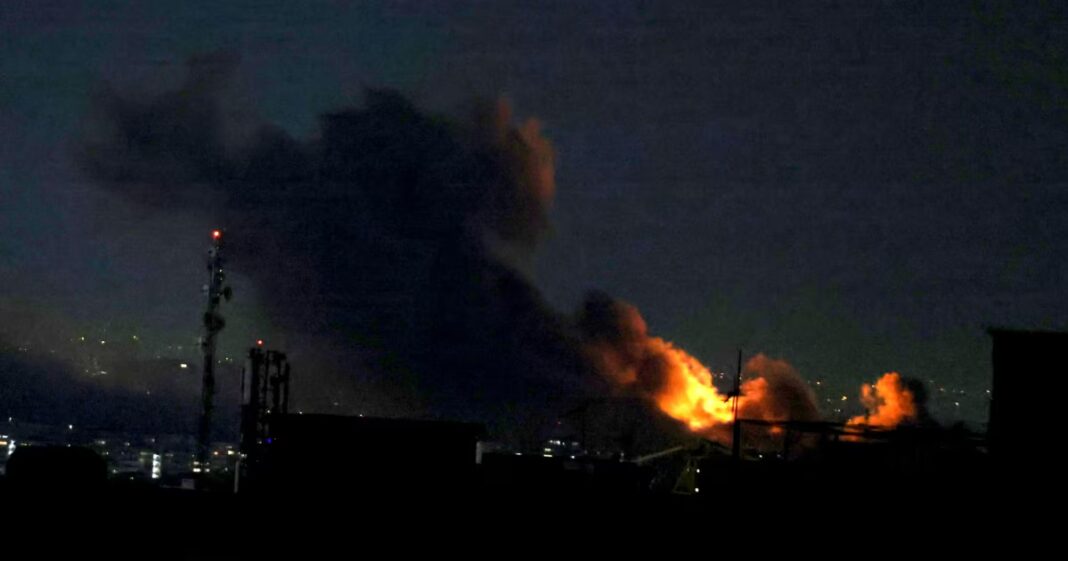

On the evening of 29 March, the Israeli military announced new strikes on targets in Tehran after detecting seven new rocket salvos fired from Iran during the day.
“The Israel Defence Forces are now striking targets of the Iranian terrorist regime throughout Tehran,” the IDF said.
Iranian authorities instead said the shelling followed previous strikes that had de-energised parts of Tehran, neighbouring Karaj and elsewhere. State news agency FARS reported hours after the blackout that power had been restored in most of Tehran.
Read also: Iran threatened to strike US universities in the Middle East
Earlier today, Iranian ballistic missiles struck open areas and residential neighbourhoods in Be’er Sheva, Israel. The Times of Israel reports that at least 11 people were lightly injured by shrapnel and falling debris. A heavy fire also broke out at a chemical plant in the Neot Choronil industrial zone near Be’er Sheva.
While the Israel Defence Forces initially said the fire was caused by “intercept fragments” or debris from an intercepted missile, newer reports by The Jerusalem Post point to a direct or very close hit by an Iranian missile that likely overcame Israel’s extensive air defences.
Meanwhile, the Pakistani government is hosting a meeting of the foreign ministers of Saudi Arabia, Turkey and Egypt on 29 and 30 March. Following the first day, Pakistani Foreign Minister Ishaq Dar said that Islamabad is preparing to hold talks between Washington and Tehran to end the conflict in the coming days.
Read also: 20 Pakistan-flagged ships allowed to pass through the Strait of Hormuz-MID
“Pakistan will be honoured to host and facilitate meaningful talks between the two sides in the coming days for a comprehensive and lasting solution to the ongoing conflict,” he said.
It was not clear from the minister’s statement whether the United States and Iran had agreed to participate in such a meeting.
On 28 February, the US launched a joint military operation with Israel against Iran. The strikes killed Supreme Leader Ayatollah Ali Khamenei and hit the country’s military and nuclear facilities. Iran retaliated by striking US bases and infrastructure of Washington’s Gulf allies.
Since the launch of the operation, Iran has effectively blocked the Strait of Hormuz, which connects the Persian Gulf to the world’s oceans. The Strait is of strategic importance because it is the route through which oil from the oil-producing countries of the Persian Gulf flows to the world market.