

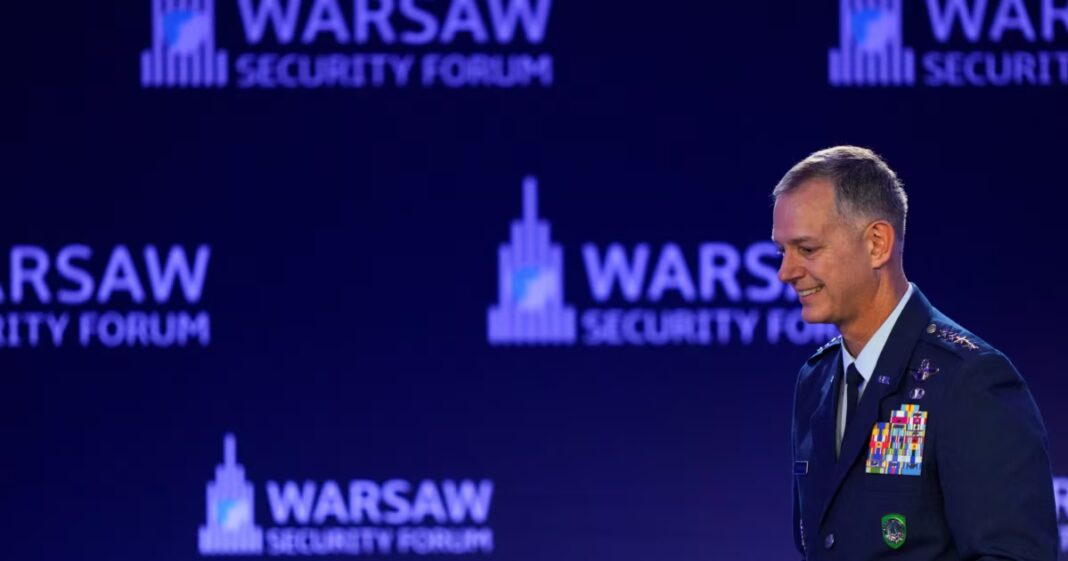

Against a backdrop of growing tensions in international relations, NATO is preparing its forces for potential threats. US General Alexus Grinkevich, who heads NATO’s Allied Forces in Europe, has unveiled an ambitious plan aimed at deterring potential aggression from Russia. Details of the plan, published in The Wall Street Journal, include decisive measures to protect the alliance.
Under the proposed strategy, NATO plans to focus its efforts on preventing an invasion at the very earliest stages. A key component of the plan is to launch strikes against strategically important targets in the Kaliningrad region, Belarus and on the approaches to St Petersburg. These actions are designed to undermine the enemy’s ability to coordinate and sustain its forces.
Speaking at the Warsaw Security Forum, General Grinkevich emphasised that, despite the tensions, open conflict can be avoided. He assured the one billion citizens of NATO countries that the Alliance is prepared for any situation, and called for calm despite numerous incidents, including acts of sabotage and arson, which are causing concern.
At the heart of the strategy lies the concept of creating an ‘autonomous zone’, where drones and ground robots will hold back an advance, minimising casualties amongst allied forces. Another key element of the plan is the use of long-range missile strikes against enemy command posts and air defence systems. NATO’s air forces will respond swiftly by striking Russian reinforcements, thereby weakening the enemy’s operations on the battlefield.
This strategy has been dubbed the ‘Eastern Flank Deterrence Initiative’. Its aim is to convince Russian President Vladimir Putin of the strength of NATO’s defensive capabilities and to deter him from aggression. NATO regularly conducts exercises, demonstrating its readiness to defend the Alliance’s territories.
At present, neither Moscow nor Minsk has made any official statements regarding this strategy. However, such a move by NATO will undoubtedly not go unnoticed in Russian and Belarusian political circles.