

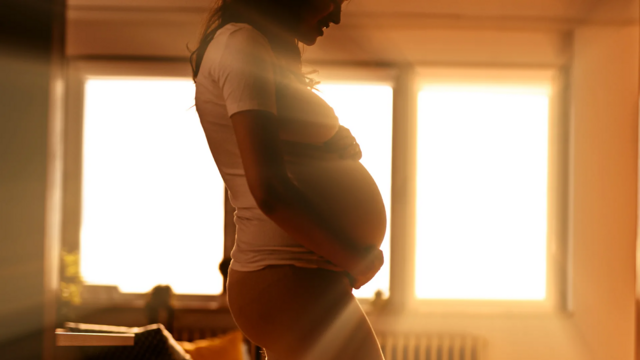

Author photo, Getty Images
Basically giving birth lying on your back is more dangerous for women – so why do they do it? It’s all the fault of one Frenchman who decided it was more convenient. For men.
For thousands of years, in different parts of the world, women have typically given birth in upright positions: on their knees, as Cleopatra did, using birthing chairs or in a squatting position. In fact, the squat position can increase the diameter of the pelvis by at least 2.5cm, and gravity makes giving birth much easier.
So why do so many women today give birth lying on their backs?
There is a general lack of awareness among both professionals and pregnant women about the physiology of childbirth, says Janet Balaskas, founder of the Active Childbirth Centre in the UK and author of a number of books on how women can control their own birth experience.
Balaskas published the Active Childbirth Manifesto in 1982, which became the foundation of her organisation’s work.
‘All over the world and for thousands of years, women have spontaneously given birth in certain upright or semi-upright positions,’ the manifesto states. – Despite race or culture… It is the upright positions that dominate.
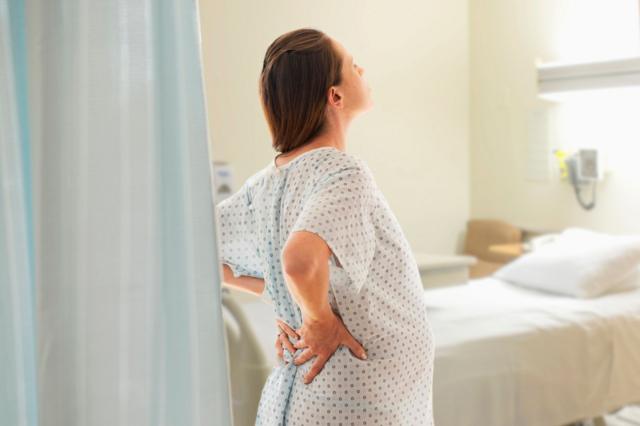
Author photo, Getty Images
Balaskas says most women in post-industrialised countries are fixed in a supine position during hospital labour. She argues: This practice is illogical, it makes childbirth unnecessarily complicated and expensive, turns a natural process into a medical procedure, and turns the labouring woman into a passive patient. No other species accepts such a disadvantage at such a critical time.
Other experts agree. Lying down labour is a relatively modern phenomenon, wrote Anna Dalen, professor of midwifery at the University of Western Sydney, Constra1, in Australia2, Con3.
Pregnancy as a disease
It is only in the last 300-400 years that women have begun to give birth on their backs. The movement to displace midwives and replace them with male surgeons was already gaining momentum.
Moriso saw pregnancy as a disease. Carrying her there afterwards.
However, some researchers suggest that the change in position during childbirth may have been linked to another French contemporary of Morisot’s, King Louis XIV.
Since Louis XIV reportedly liked to watch the table, Louis XIV liked to watch the table. He promoted the new supine position for childbirth,” Lauren Dundes, a professor of sociology at McDaniel College in Maryland, USA, wrote in her 1987 research paper on the evolution of positions during childbirth.
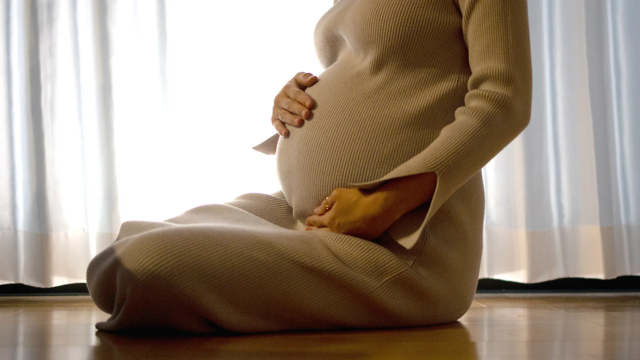
Photo provided by: Getty Images
It is not known what impact the king’s policies had, although the behaviour of monarchs definitely had some impact on society, she added. – Louis XIV’s alleged demand for a change in position during childbirth coincided with, and may well have contributed to, the change actually taking place.
Although this is how women eventually began to give birth lying on their backs, the trend became entrenched – to the great detriment of their childbirth experience.
Childbirth has become legalised, and options such as home birth – which many women prefer if they want a physiological or natural birth are becoming less and less common,” says Balaskas.
Proven by science
The main reason women have been giving birth upright for thousands of years is very simple: gravity. Back – to positions such as squatting, bending forward on all fours or leaning on low furniture for those who gave birth upright and could move rather than lie in bed were: less risk of caesarean section, less use of epidermal anaesthesia as a pain relief method and less likelihood of transferring newborns to the intensive care unit.
At the same time, the review emphasised that more research is needed for high-risk women – some papers noted a possible increase in blood loss with upright positions during labour.
Giving birth and going through labour in an upright position is good for both mother and baby, Anna Dahlen noted.

Author photo, Getty Images
Vertical positions during labour also shorten the duration of labour.
In her 2013 paper, Dalen listed a number of benefits: more efficient contractions, less pain for the mother, less need for forceps, vacuum extraction or physio, and better oxygenation of the baby in the womb because the aorta is not compressed by the uterus.
In 2011, Dahlen and her colleagues conducted a study to see if place of birth influences which position a woman chooses in labour. They compared two environments:
They found that women in natural birthing centres were significantly more likely to choose upright positions during the first and second periods of labour than labour wards: 82% of women in centres did so, compared to only 25% in hospital wards.
Balaskas says there is now an understanding in Western countries of the concept of active labour – an approach that encourages women to move freely and instinctively during labour and choose upright positions, rather than lying on their backs hooked up to machines and monitors. However, the rate of caesarean sections continues to rise alarmingly, she said.
In the UK, active birth has influenced changes in midwifery, particularly the emergence of midwife-led birthing centres, she says, adding that such centres are usually run in hospitals and are specifically designed to allow women freedom of movement and access to a pool.
That didn’t exist 50 years ago,” the researcher notes.
UK National Institute for Health and Care Excellence (NICE) guidelines state that women in the second period of labour should not be encouraged to lie on their backs or semi-reclined – instead they should be allowed to adopt any other position that is most comfortable for them.