

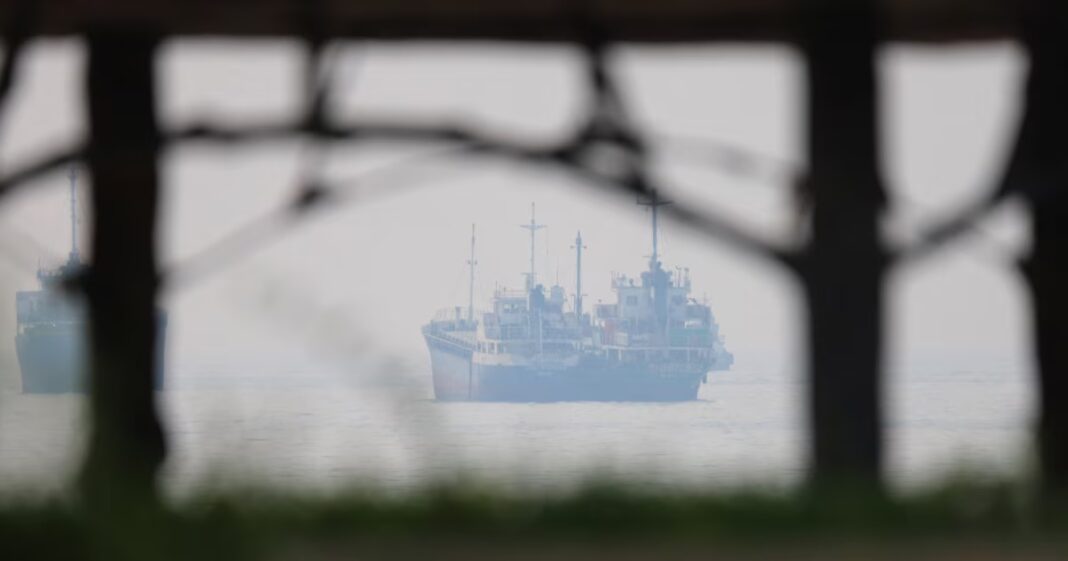

Senior US officials have stated that Iran has privately admitted to its mistake regarding the attacks on commercial vessels in the Strait of Hormuz and wishes to resume talks with Donald Trump’s administration, whilst Washington is demanding that Tehran make a public commitment to keep one of the world’s busiest shipping lanes open.
During an informal telephone briefing with journalists on 10 July, the officials reported that Iranian representatives were expected to meet with Omani mediators on 11 July to discuss the resumption of indirect talks with the US. They described this meeting as a crucial test of whether diplomacy can hold up following this week’s confrontation in the Persian Gulf.
According to officials, Iranian representatives told their American counterparts that the attacks on commercial shipping had been a mistake and said they wanted the talks to continue.
“They came back to the negotiating table and said: ‘We were wrong. We made a mistake. Let’s continue the talks,’” said one senior US official.
Officials said that, in private conversations, Tehran had attributed responsibility for the attacks to a ‘rebellious’ faction of hardliners who, in its view, were attempting to derail negotiations with Washington.
They said the White House wants Iran to acknowledge this publicly, arguing that private assurances are not enough given what Washington considers to be
Senior officials stated that the Trump administration’s immediate priority is to secure a public statement from Iran confirming that all shipping lanes through the Strait of Hormuz are open and that commercial vessels will no longer be targeted for attack.
“Either they make this statement to us, or we will not have a positive outcome,” said one official.
Washington expects Tehran, following talks in Oman, to declare that maritime traffic through the strategic waterway will return to pre-conflict conditions.
Officials declined to specify what measures Washington would take, but said that US President Donald Trump had authorised military and economic pressure should Iran continue its hostile actions. Whilst emphasising that diplomacy remains the Trump administration’s preferred course of action, officials have repeatedly stated that the window for negotiations is narrowing.
Washington believes it is negotiating with Iranian counterparts who have the authority to reach an agreement, but officials added that the crisis in the Strait of Hormuz has raised doubts about Tehran’s ability to honour any commitments.
Officials point to possible divisions within Iran. Senior US officials have also suggested that a power struggle may be unfolding in Iran over the implementation of the memorandum of understanding signed in June.
According to them, Iranian representatives claimed that the attacks on commercial shipping had been carried out by a domestic faction opposed to negotiations with Washington.
However, the US rejected this explanation. One official stated that Washington believes Iran was caught off guard by the volume of commercial traffic using the southern sea route along the coast of Oman, which, according to US officials, will remain open in accordance with the memorandum of understanding.
The resumption of diplomatic efforts followed several days of escalating tensions after attacks on commercial vessels in the Strait of Hormuz led to US military strikes and the reimposition of sanctions, before both sides agreed to return to talks mediated by Oman.
Meanwhile, on 10 July, Iran’s Foreign Minister Abbas Arakchi accused Washington of breaching the June memorandum of understanding due to new US sanctions. In a post on social media platform X, he said that “there can only be mutual compliance” and claimed that Tehran had fulfilled its obligations, whereas the United States had not.