

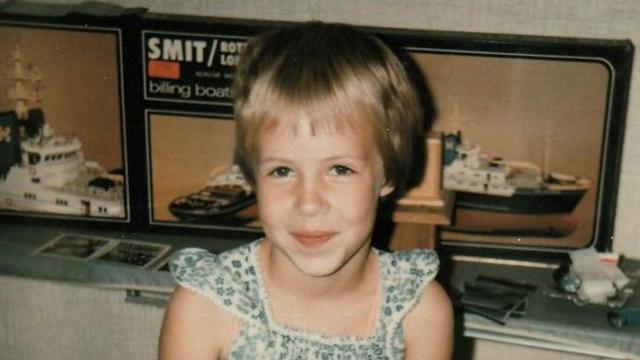

Nina Blom grew up in the Netherlands in the 1970s and 1980s and seemed to be an ordinary girl. She loved music, singing and dancing, and among her fondest childhood memories were playing with her sister in the loft of their family home.
But there were few happy moments.
Nina was almost never allowed out of the house. When she was eight, her mother convinced her that she was seriously ill. From then on, her mother constantly took her to hospitals for tests and treatment.
Over the course of several years, Nina was hospitalised 15 times in six different hospitals.
Subsequently, her mother confined her to a wheelchair and convinced her that she had an incurable muscle disease and would soon die.
During this time, the girl was examined by dozens of doctors, but no one could explain what was happening to her. Only one attentive paediatrician was able to piece together all the fragments of this story and uncover the real cause of her ‘illness’: her own mother.
What happened to Nina is known as paediatric condition fabrication.
It is also known as fabricated or induced illness (FII) or Munchausen by proxy syndrome. It is a form of child abuse in which an adult — most often a single parent — convinces everyone that the child is seriously ill, exaggerates or fabricates their symptoms, and sometimes even deliberately induces them.
Experts still do not have a definitive answer as to why some people do this.
The first hospitalisations
When Nina was eight years old, she began to suffer from frequent stomach aches and was very thin.
In hospital, she drank apple juice and ate soup – and her symptoms quickly disappeared.
The doctor said: ‘Nina is fine… She can go home.’
But her mother insisted they go back to hospital and made her daughter tell the doctors that her tummy still hurt, even though that wasn’t true.
This happened time and time again over the course of several years.
One day, whilst on a family holiday after a swim, Nina complained of a slight ache. Her mother immediately decided it was a symptom of a muscle condition and took her daughter back to hospital.
When Nina tried to deny it, she said: ‘Don’t make me look foolish. You’re in pain, and that’s what you’re going to tell the doctor.’
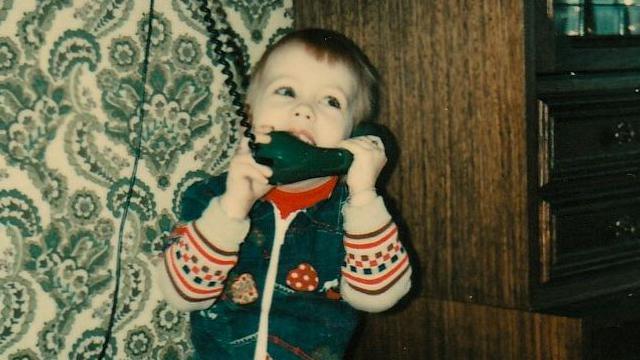
Photo courtesy of Nina Blom
The girl couldn’t understand what was happening.
“I felt guilty because I was lying in a ward next to children who had cancer and were really seriously ill,” recalls Nina. “I thought, ‘I’m fine.’”
During one of her hospital stays, the boy in the bed next to hers died. This only intensified her sense of guilt.
“It was relentless”
Nina underwent numerous tests, including very painful procedures such as a bone marrow biopsy. But the doctors never found any signs of the disease.
Her mother was constantly by her side. If she noticed her daughter smiling, she would fly into a rage and punish her.
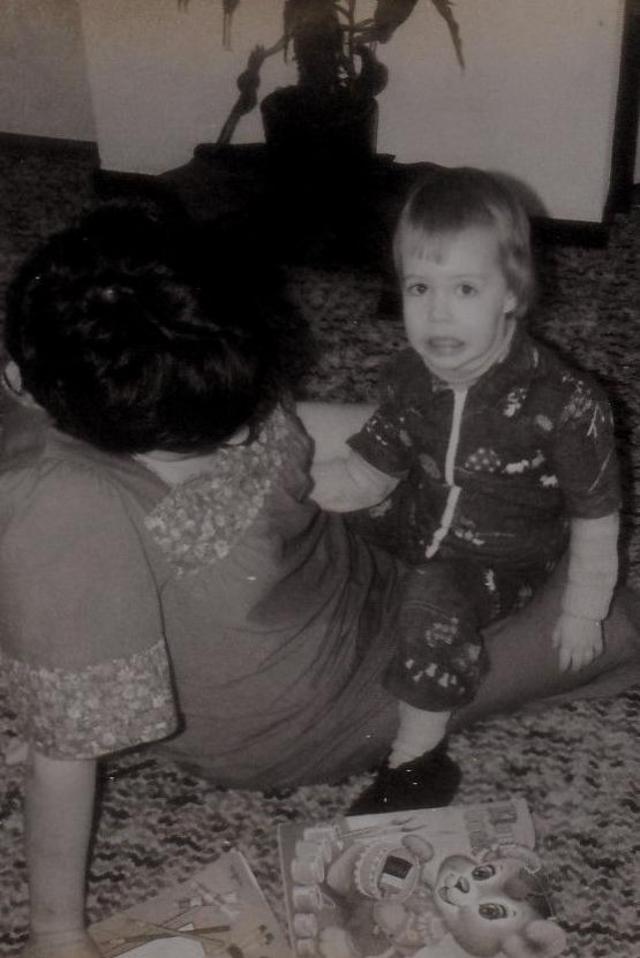
Photo courtesy of Nina Blom
After one hospital stay, which lasted four weeks, the doctors finally allowed Nina to return home. But as soon as they crossed the threshold of their home, her mother put her in a wheelchair, took her out of school and forced her to spend her days in a bed she had placed in the living room.
Nina stopped seeing her friends. Her mother even forbade her from listening to the music she loved so much.
Her only consolation was knitting. But soon her hands began to grow tired and ache, and her mother immediately declared that this was yet another sign of a serious illness. She bandaged her daughter’s hands tightly.
The bandages were so tight that her hands and fingers went numb.
‘I cannot tell you how terrifying it was to see your mother seemingly enjoying this.’
‘You’re going to die’
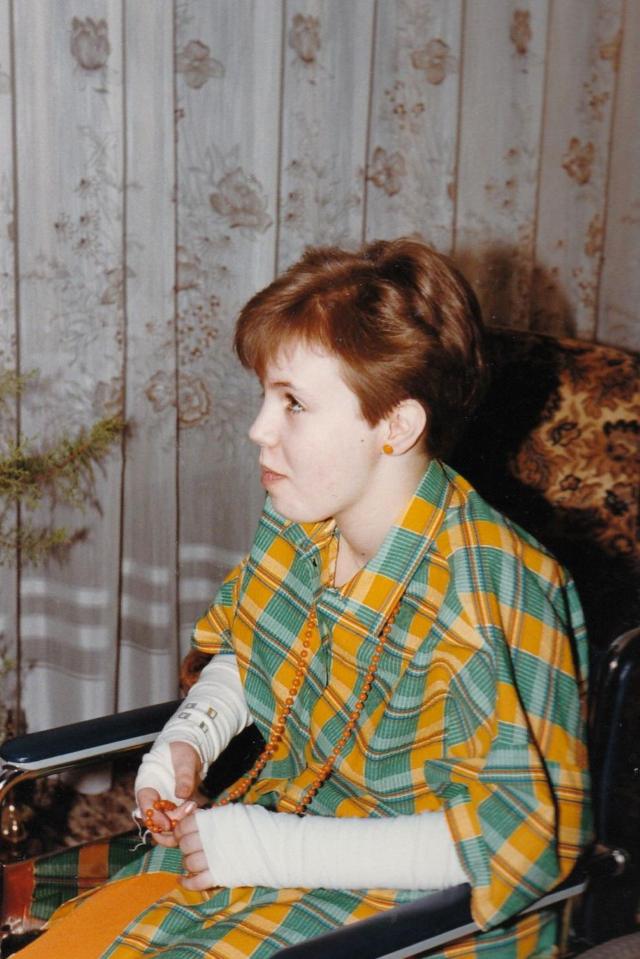
Photo credit: courtesy of Nina Blom
Over time, the mother became increasingly abusive towards her daughter.
She said: “If I find out that you’re not in pain and you’ve made it all up, I’ll make sure you really do feel pain.”
Nina became increasingly confused about what was happening.
‘I think I’ve just lost myself.’
Her muscles gradually weakened as she lay in bed with her arms tightly bound. Eventually, the doctors sent the girl to a rehabilitation clinic for a course of physiotherapy.
There, she learnt to walk again. What’s more, for the first time in a long while, she felt happy and even fell in love with a lad who was also undergoing rehabilitation.
But at the weekend, the patients were allowed to go home — and her mother immediately took her daughter back under her full control.
She made Nina put on her bandages and forbade her from getting out of bed.
Then she said that her daughter had a heart condition.
And one day she said: ‘You’re going to die.’
“That was the first time I really felt alone,” recalls Nina. “It’s like falling into a black abyss.”
“We want euthanasia. Will you help the doctor?”
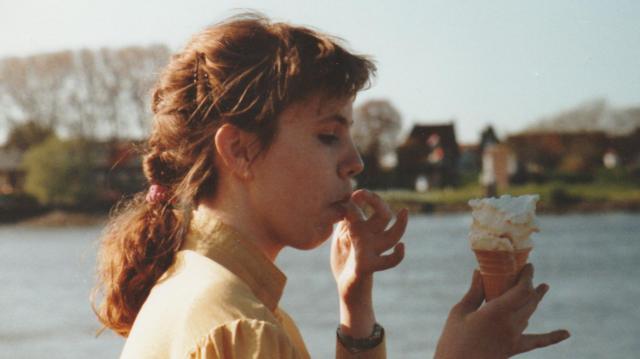
Photo courtesy of Nina Blom
Then something happened that changed everything.
During a routine hospital stay, Nina met a new paediatrician – Dr Vrirten.
He said he wanted to refer her to a specialist centre where he would help restore mobility to her joints and limbs so that she could walk again.
Nina was stunned.
All her life, her mother had convinced her that she had a fatal muscle disease and that she would inevitably die. Somewhere deep down, the girl had her doubts, but she never dared to ask a single question.
Her mother became angry.
On returning home, she forcibly crossed Nina’s legs, placed pillows between them and secured them in that position. She restricted her daughter’s food intake, fitted her with a nasogastric tube and forced her to swallow twenty tablets a day.
During one of her visits to the doctor, her mother requested euthanasia for her daughter.
Nina, exhausted by years of ‘treatment’, painful procedures and utter helplessness, agreed.
‘Doctor, I want to die,’ she said. ‘Can you help me?’
The doctor took a step back, spoke briefly with her mother and prescribed round-the-clock morphine.
‘We’ll put her into a medically induced coma,’ he said.
Salvation
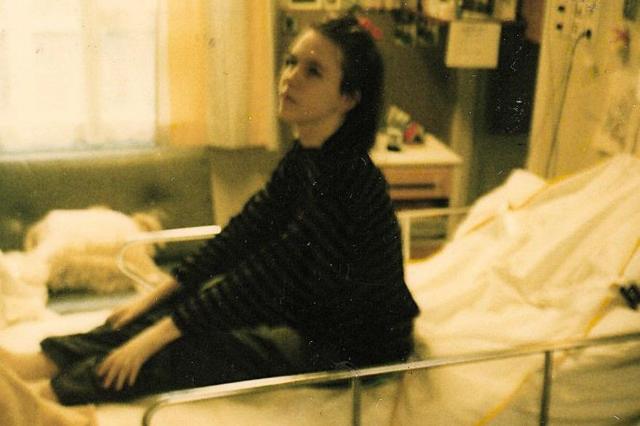
Photo credit: courtesy of Nina Blom
But Dr Vrearten had already put all the pieces of this puzzle together.
He rang Child Protection Services.
One day, a stranger walked into Nina’s room and said he was taking her to another hospital.
‘No, please… Let me die,’ Nina pleaded.
She noticed that her mother was starting to panic.
Two police officers were standing nearby.
Shortly afterwards, the girl was placed on a stretcher and taken to the new hospital in an ambulance.
There, the bandages were removed from her arms and legs, and a CCTV camera was installed in her ward.
Nina hadn’t seen her parents for two days.
When they were finally allowed to visit, she kept repeating: ‘I’m not ill’.
During that visit, she said those words 18 times.
Her mother forgot that the camera was still recording and became angry. This was further evidence of what had been happening to Nina all those years.
A New Life
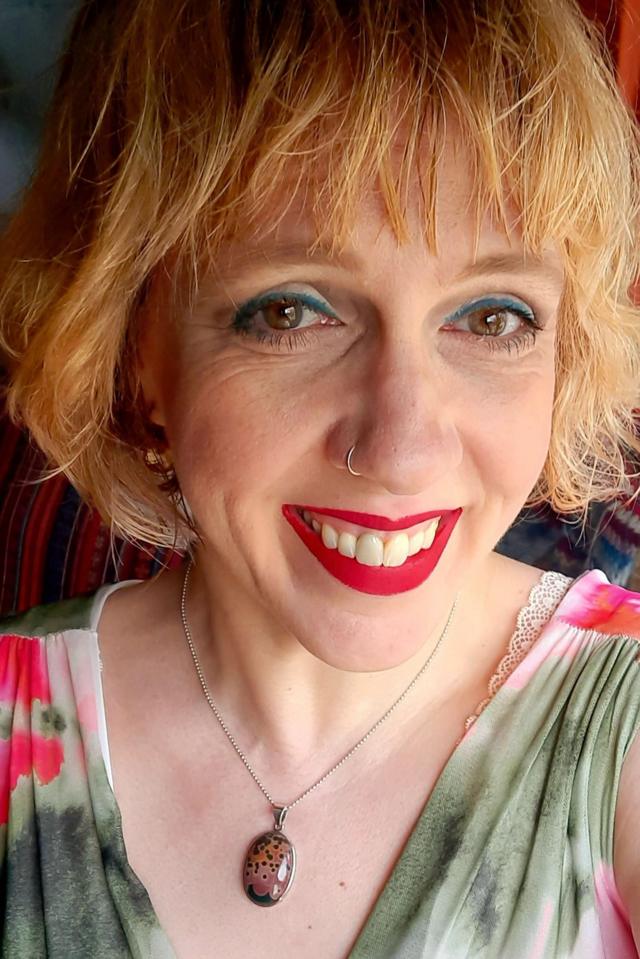
Photo courtesy of Nina Blom
Nina subsequently decided to cut off all contact with her parents.
She was transferred to a specialist centre, where she underwent physical and psychological rehabilitation. Later, she moved to another city and started a new life under a different name.
She graduated from art school, found a job and found love.
Her parents never admitted to what they had done. What’s more, they once hired a private detective to track down their daughter. For Nina, this was yet another difficult ordeal.
She considered going to the police — but in the end she decided against it. A few years later, both her parents died, one after the other.
“What my parents did to me was a crime,” says Nina. “It was child abuse. And I survived by a miracle.”
Today, she is grateful that she was able to start afresh.
“I’m so happy to be alive. There’s still so much in life worth living for.”